
SPRING/SUMMER 2026
Anna Kornbluh Argues for the Right to Culture
interviewed by Emerson Rhodes
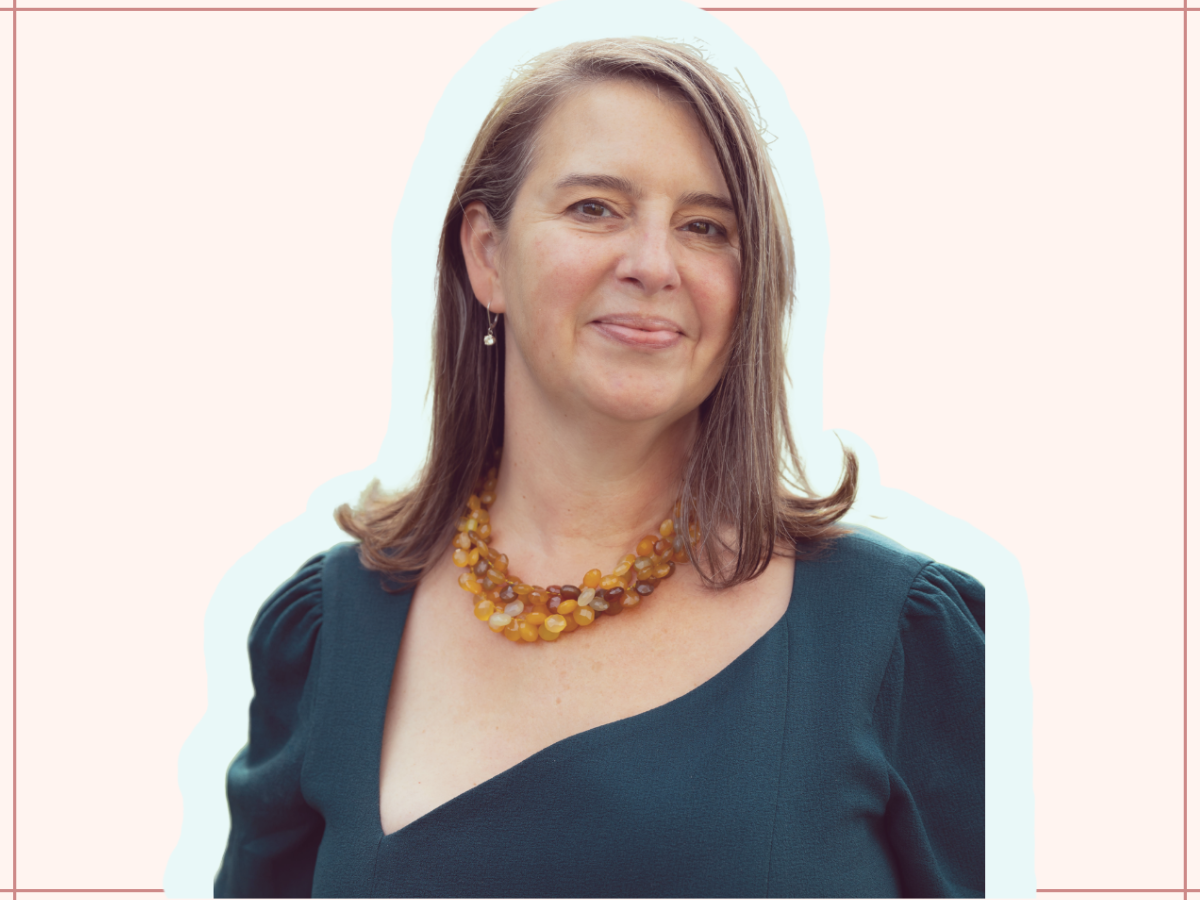
Photo: Anna Kornbluh
Anna Kornbluh is an American critic and professor currently teaching at the University of Illinois at Chicago. Bearing the intellectual legacy of the late Fredric Jameson, Kornbluh’s work focuses on aesthetics and contemporary cultural production. Her book, Immediacy, or The Style of Too Late Capitalism, was published in 2024 by Verso Books to critical success, and has remained at the center of many contemporary artistic and theoretical discourses in the years since. Kornbluh’s work also extends far beyond the traditional academic sphere through her involvement in collectives such as V21 (Victorian Studies for the 21st Century) and InterCcECT(Inter-Chicago Circle for Experimental Critical Theory), as well as spearheading initiatives like Humanities Works and Against AI.
Kornbluh’s work exemplifies a concerted effort on the part of both critics and academics to resist the encroachment of capital on culture. Both her scholarly writings and her advocacy outside of the academy insist on the ideals for more intentional cultural consumption and more deliberate creative practices. We spoke this February on Immediacy, social theory and literary forms, and the importance of public funding for the arts and humanities.
Our conversation has been edited for clarity and length.
EMERSON RHODES: To start, the book you've written, Immediacy, or The Style of Too Late Capitalism, our interview team has read and enjoyed it very much, but maybe for some of our readers who haven't read the book, how would you go about defining “immediacy”?
ANNA KORNBLUH: So there are two layers to the definition. One is that immediacy is a kind of undoing of mediation, an undoing of representation and negating of intervening levels of meaning, making, and process, and trying to instead have what we all know as the temporal connotation of immediacy (like instantaneity speed) but having that kind of ramify into more metaphysical connotations about presence and intimacy and intensity.
With the other layer, the definition is to think about that attitude towards representation, or that style of anti-representation, as being anchored in broader social and economic relations. And that's a kind of argument that a lot of cultural critics might make, such as we have a kind of aesthetic style that we're noticing is different from stuff that came before, and how can we explain this difference? Perhaps there are some transformations in society or in the economy that we can connect it to. What I try to do in the book is connect this intolerance for mediation to what, in industry, is called “disintermediation.” It speaks to a lot of efforts to cut out the middleman, as well as intensify, express-ify and immanentize the logics of exchange, and to link those economic processes to broader crises about production. Intensity of circulation, trading goods around, delivering stuff faster and faster, same-day delivery, on-demand access, Postmates, and so on. When we have that intensity, it is always compensating for some limitations in production. We're eschewing making things right in a more difficult way—We don't have enough houses. We're not building houses, but we are putting properties back into circulation through an app like Airbnb, etc…
ER: Your book was published in 2024 and, in it, you talk about the idea of the looming omnicrisis and the speed at which things are starting to change. I'm interested in the two years since you've published the book; if you have found that you want to amend your thesis, seeing how things have changed, or inversely, are there any things that have emerged that you feel vindicated by since writing this book?
AK: That's a great question. I would, if anything, extremize things further. ChatGPT 4 was released when I was in the final production stages of the book—I think I was able to add like a line or two about it. But the whole enterprise, the whole financial formation around generative AI products, the entire apparatus of being against making, being against processes, being against creative artistry, intellectual production, writing—and disparaging all of that as a waste of time, “women's work,” stuff for dummies—extremizes the immediacy demand to cut out the middle and get to the output. No matter that the output is carcinogenic in its externalities, and completely unreliable in terms of what it's offering intellectually or aesthetically. The whole drive for the Gen AI bubble, to me, is a really intense economic manifestation of this distaste for process, for representation, for the work of making meaning, ideas, and beauty.
ER: I think that's a really great point. Something that I thought was interesting in a text that I read in tandem while reading Immediacy, was Adorno's Notes on Hegel, which I saw recently you read in your reading group InterCcECT, for which you had, as you say, “Hot Adorno Summer.” I was reading it and I was interested in the fact that Hegel and Adorno seemed to suggest that there is almost no such thing as immediacy, arguing that immediacy is less human and is only tolerated via a mediated mechanism of exchange. I don't know if you'd describe yourself as a Hegelian, necessarily, but I was interested in your thoughts on the interplay of those ideas.
AK: I don't know, is it aggrandizing to be a Hegelian? I think that Hegel makes a lot of thought possible, so I would identify as Hegelian in that way, and especially, he's the condition of possibility for that kind of organized study of aesthetics. His arguments about consciousness and ideas and philosophy and the state and art are all the basis for a lot of Marx's really important elaborations of the notion that philosophy, consciousness, art aren't just like up there in the ether: they are situated in material and economic social relations. Without Hegel there is no Marx. So to me, I'm happy to be Hegelian, identified in that way.
I think for Hegel as for Adorno, the illusion of immediacy is a kind of mistake. It's a very seductive mistake. It's a promise for certain kinds of artists. It's a promise for certain kinds of philosophers. It is something that we desire. Who doesn't want to be closer to stuff, or who doesn't want to be in the uncut funk of the truth and so forth. But that is always fallacious. There are always mediations that are intervening between us and witnesses or us and the thing or us and raw experience—which makes any relationship between them possible in the first place. And there are different models for describing what those mediations are, and how much they are like structures of perception in a Kantian or Hegelian framework, how much they are stages of history, or how much they are the specific mode of production or ideology for further consideration. But overall I am very invested in the idea that the contemporary enthusiasm for immediacy across artworks, and consumer demand for artworks and across our kind of intellectual sphere, especially in academic theory, that that demand is a mistake that is not reflective enough about the congruence between immediacy as promise, fantasy, style and immediacy as ideology, immediacy as our economic determinants that we should be able to understand rather than just replicate.
ER: So to clarify, you feel that immediacy is sort of an incidental part of, say, capital, or is it more of a deliberate push by our society to approach or to extract value?
AK: Centering the narrative around art here is helpful. I think the current stylistic debates about art is dominantly for a particular kind of art practice under the guise of anti-fictional, anti-representational, the “keeping it real” mantra of immersion. It's anti-medium, it's anti-specificity, everything is supposed to be omnisensory all the time. And that current style is wholly generated by capitalism.
If you want to talk about internal to capitalist logics. How does immediacy relate to capitalism at large? The basic drive of capitalism is to get money from more money, right? That process passes through the commodity form. Then it becomes other kinds of more elaborate financial forms, but the drive is actually to obviate that necessary middleman and disintermediate, to immanentize the exchange and production processes, so that valorization is self-valorization, as Marx describes it. There's a kind of metaphysical pull of capital towards immediacy.
ER: Keeping in a little bit of a more Marxist framework, your book obviously pulls a lot, and you clearly take a great amount of inspiration from Frederic Jameson, who unfortunately has passed away in the time between when this book was published and this interview now. I want to know more about how you have reconfigured, or continue to configure this book in the legacy that he has left behind.
AK: The title and the structure of the book are very owing to him, as are the kind of method and the argument in many ways—namely, the idea that it is rigorous cultural interpretation to figure out how aesthetic modes and genres and styles are articulated to the economic base and to see how transformations in those styles might be efforts to make sense of those economic transformations. That's the basic procedure of Marxist cultural interpretation, and Jameson did it better than anybody else. I think that he solved a real problem about “what is the rigorous method?”, and that it's fine to just keep working in that lane of his solutions, because when you keep doing Jamesonian interpretation about different objects, you're doing it in different contexts with different economic underlying formations. He himself said that postmodernism was no longer dominant in the 21st Century. So what comes after postmodernism? What is the style? And what accounts for a transformation in style? These are the questions I try to respond to.
I think those are genuine questions for cultural observers and cultural interpreters, and so that's what I was trying to answer there. In the time since he has died … gosh, I mean, how could he have died? He was so good and so talented and so creative and so prolific that it just seemed like he wouldn't ever die. I feel glad that I made this project and made an effort to show that his work has a life beyond him. Because it is methodologically sound and correct and dynamic, and so I hope that that is a contribution to keeping him alive for us.
ER: I'm glad you brought up the cultural objects that are worthy of analysis, because you bring up in the book, various book titles, movies, theory—it's a very rich text in that way. I was really interested specifically in your section about writing, and your discussions of the first person, where you have a laundry list of books of the modern era that are also in the first person, which include books like Ben Lerner’s 10:04, and Han Kang’s The Vegetarian but also include 50 Shades of Gray, and that breadth was pretty shocking to me. I was interested in what spurs this specific group of references?
AK: Okay, so scale is a problem for an argument like this, obviously. If you have the impression that something has changed in culture, something has changed in our dominant, hegemonic, industrially produced culture, then how do you prove that? You've got to show a comprehensive range of stuff. That means that I'm thinking across media, so there are interpretations, analyses, and references to descriptions of studio artworks, literature in a wide variety of genres, there are brief discussions of architectural works, as well as discussions of television and film. So there's a lot of cultural products across media, and that follows kind of the structure of Jameson's Postmodernism book, where there are different medium-specific chapters, but there are sort of problems with the collapse of medium specificity in immediacy, or in the transition from postmodernism to immediacy, which means that the same chapters weren't distinctive. He has both video and film chapters, for example, whereas to me, one of the things that is most distinct technologically about media production in the 21st Century is the collapse of film into video. Again, that has to do with a kind of loss of medium and a dissolution. So anyway, I'm thinking across media—which highlights this dissolution of forms.
In the Writing chapter specifically what you're getting at is this idea that we would think there's some qualitative distinction between Lerner and 50 Shades of Grey, right? But the phenomenon I'm explaining in that little section of that chapter is about a really profound historical mutation in the literary form, which is the dominance of the first person narration across fictional genres. And this is an extremely strange change, an event in the history of the novel. For 300 years, the English novel has been composed mostly in the third person, and there are all kinds of large corpus analysis and statistical ways to prove that. In the 21st Century, across high art like Ben Lerner and extremely pulp genre fiction, there is a common repudiation of the third person and an embrace of the first person. The fact that this transcends qualitative distinctions or genre distinctions or, as it were, “literary prestige,” makes all the more mysterious the cause! It's all the more demanding of explanation. I'm trying to show that there's a breadth and a scale at which these cultural changes are happening.
ER: As you put those two together, I think one of the things that you say about first-person narration is that it's unmediated, which is a theme throughout the book. I was hoping if you could kind of expand upon that given the transcendence of literary cast specifically, but you also want to talk about first person narration in the form of video or theory?
AK: I want to be clear—people really fixate on the first-person thing, because I think they're defensive about it a lot of the time, and they don't want Ben Lerner to be affiliated with 50 Shades of Grey, but that's only one element of the analysis. The project is about seeing across these different literary platforms a coherent repudiation of fictionality.
First person is one aspect of that. The abstract third person—the unique consciousness that we only get in fictionality (nobody gets to live life in the third person)—this constitutive, even definitional feature of fictionality is set aside by the first person.
But beyond that, there are lots of other aspects anti-fictional or immediacy style, such as that there's not a long time-horizon in these novels. You don't get a gap between the narrating “I” and the character “I”. There are some first-person novels that were written 200 years ago, where it's “I'm looking back at my whole life, and I was six, and I did these things,” and they manage that gap where the narrator doesn't yet want to reveal to us what he now knows. That kind of self-alienation and self-distancing is a product of the temporal horizon of the narrative.
In a lot of anti-fictional texts, we have this immanentist, presentist immediate: it's happening right now and it's not a long duration. It might even be in the present rather than the past tense. This is an immediacy style temporal quality, things like a short 150-page text that extends only a brief interval of time.
Another aspect is the diminution of character—no other minds, no substantive relationships, just my own ramblings. Another is a deliberate plainness of language, short sentences, short paragraphs, a rejection of figuration, a rejection of metaphor. Finally there is, in the self-styled avant-gardist tier of it, a tendency to explicitly insist that the pages are not fiction. All of these aesthetic features are of the immediacy style. The unprecedented dominance of the first person is a signature, but it is far from the only literary trace.
ER: Keeping with this idea of first person, I was very taken by your section on autofiction. You make this bridge towards looping it back into the way the MFA programs are structured, and how these institutions feed into themselves. You go on to later have a section about the nature of theory, so I was interested in whether you consider the way that the popularity of auto-fiction as a product of the MFAs is analogous to the rise of auto-theory, where it might have links to the academy.
AK: To me, the institutional correlation is the real crisis of defunding higher education and what that's meant for the casualization of academic labor. I am inclined to interpret contemporary autotheory as largely the product of degraded labor conditions for the production of knowledge. You don't have library research budgets, you don't have tenure, you don't have workloads that are structured to facilitate research, and instead, theorists just produce self-disclosure, as if it is a charming, charismatic, spontaneous presentation, when it is actually a symptom of our very poor working conditions.
I do say that in Immediacy at some length. People are interested in being “relatable,” in sales figures instead of library budgets, so they think that rather than making an argument about Hegel or Adorno, they want to confess how they masturbate. That is an audience gathering device, this idea of self-baring: I'm not going to have the pretense of producing knowledge or ideas or expertise. I'm just going to be a body just like you. And we have to see this gesture in the context of the degraded labor conditions that have degraded their audience, because there aren't libraries to purchase the academic books, and there aren't graduate students looking for new ideas to be trained in, there isn’t going to be the next generation's knowledge workers to engage with ideas.
ER: That’s a really interesting perspective. I'm also sort of interested, given that you write theory and how you position yourself in the field given the development of autotheory.
AK: I mean, there is no I pronoun in the entire book. I'm not talking about my body, not talking about my sex life, not talking about my reproduction, because it's not a private genre; it is a public genre. I'm trying to provide people with frameworks for understanding culture, for understanding the economy, and for understanding meaning.
ER: You feel sort of productively divorced from your theory, where you put a deliberate distance between yourself and the work that you're producing for us?
AK: I have a research job. I have tenure, which very few people have. I have access to a research library. I have a workload that's structured, where my job is to write books. I love teaching, and it's very integral to my research process, and the balance of teaching and research I experience is possible at an R1 university. All of that stuff is about me, but institutionally and economically, not personally. It's about the conditions for me to produce these arguments.
I think that it is methodologically robust for cultural critics to try to understand the economy at the same time as they're trying to understand aesthetic formations. That is a commitment to a Marxist tradition from Hegel through to Jameson and that commitment structures my knowledge. It's not about my personality, per se, and lots of people with different personalities from mine can also work in that tradition.
I believe there are things that are my privileges or my institutional location that make the work possible. There are things that are my commitments, that, again, are about my education, my participation in institutions and traditions, my membership in political bodies. But Immediacy is not a story about how Anna Kornbluh is cool or singular or suffers more than other people, which seems to me to be the unfortunate horizons of a lot of autotheory.
ER: I think I mentioned this earlier, we have seemed to continue on this immediacy path when it comes to the academy. You’re in the academy, you teach at UIC, how do you see this to become rectified? Or maybe you look at it and you're like, “it's just going to continue to spin out.”
AK: If the basic argument is that cultural styles reflect economic transformations, then we need certain economic changes to have a different culture. We're in a place of rejection of cultural making, rejection of thick art and fiction and wild imagining, and rejection of any creation that isn't “self-expression”. If we are in a place of rejecting difficult things, things that you don't instantly get right, that require your attention in deep ways, that aren't spectacle, we need some changes in our conditions of production in order for new styles to emerge. I say this at the end of the book, that most definitely we need more access to education, if we want more people to be making ideas and beautiful things and weird things. And we need better fundamental care, whether that's health care or mental health care or shelter and food. To take care of people's needs, to have a basis upon which you can be dynamically creative. Not that there aren't people who are creative in the unstable living conditions—there very much are. But to have it amass into a new style, a new renaissance, to overcome cultural stagnation, we would need more people to have access to producing culture, and that means that they can't be working for minimum wage 80 hours a week. We can't have our institutions for producing culture, whether that's education all the way up to Hollywood studios or publishing houses, we can't have them only driven by short-term profit gains and private equity extraction models. There needs to be fundamental public investment in public art and public culture and public education.
This is something that's not in Immediacy, but is in the work I'm doing now; the U.S. is extremely unusual in that we are the only country that signed on to the UN Declaration of Human Rights that didn't actually fund or implement the right to culture. We don't have ministries to culture in the United States, even though every other advanced country does. Countries across Europe and “the Global South” do state-supported education and state-supported arts organizations—those are about a fundamental human right. In the United States, we never had those. We started the National Endowment for the Humanities, much belatedly to the 1948 declaration, and it was never staffed, and it was never funded. The amount of money—before Elon Musk, before DOGE, before Trump, before they stole all the NEH and NEA money—that the United States government invests in cultural production is less than the amount that the 100th poorest country in the world invests. Pre-DOGE, our per capita cultural expenditure was $2 a head. The 100th poorest country in the world, Georgia, invested $111 a head. It's very normal for governments to support the production of art and ideas, and so those kinds of political and economic changes probably have to happen for us to have a new culture that is more dynamic than immediacy.
ER: I did not know any of that stuff about culture production. That's a little bit scary, it touches on this way that the systems of capital have churned immediacy for us and like taught us that this is good. I'm also interested, on an artistic level, about the perception of work, how we perceive work that does not resemble this sort of immediate style. And I'm interested in what you think about the interplay between, like, a culture that maybe is not super pro immediacy, but it's like, forced into it, and how they interface with art that you know is not immediate.
AK: Yeah, I think that's such a good question, because one of the things that is so all-consuming about immediacy is that it's a way that artists think they're supposed to be making art, and it's also a way that consumers think art is supposed to be. We want to get it. We don't have a lot of time for it, but we want to be able to talk about it or have a take on it, so it needs to be rapidly absorbed. We often end up demanding that things be very literal. Like, I don't like One Battle After Another because the black woman character isn't “good” enough. It's a little more complicated as a superficial representation of misogyny than that, right? There is a reflexive “giving your rating system” to culture that people want to share with one another, whether that's the performance of the Super Bowl or the latest Apple show—that reflexive rush to judgment often looks like the-thing-itself isn’t allowed to be complicated. It has to be literal. It has to have obvious politics. It has to be one-dimensional. You have to be able to rapidly uptake it, to scan it quickly and to get it right. There is an intolerance for things that are slow, that are complicated, that take discussing with your friends to make sense of (the rhetorical device, the irony, etc). There is utter impatience for the truth that art is not a direct message. You can't get it right. It talks out of many sides of its mouth. It's not an instruction manual. It's not a position paper. Most films and novels don't actually have coherent politics, so when you're trying to give them a political report card as your way of having a take on it, that's not a very satisfying way to engage.
But so what? Why are people making that demand? They are watching movies on a tiny phone while they're in line waiting for the urgent care doctor or while they're also supposed to be doing homework on some other screen. People don't have enough time for leisure. So there's a sense of, Oh, I gotta binge watch this and slam it, so I know what my friends are talking about! People need time for art. And that includes consuming it and being able to slowly process it, time to be confused about it, and revisit it. There's a hunger for opportunities to deliberate things together evident in Fan Reddits or people who are trying to obsess over every detail of a Taylor Swift album—that is people looking for meaning. We don't have enough spaces to do that slowly and together, as opposed to on an anonymous chat site. We need more book clubs or third spaces, things like neighborhood cafes or public benches.
ER: On the flip side of that, you said a little bit about how artists feel that they have to make things that are easily gettable and processable. But I also think that there are artists who want to make something more substantial, like movies are getting longer. One Battle After Another is 100 hours long, for example. So, how do you feel that artists act in response to this attempt of trying to create meaning in the balance of capital?
AK: So the long movie thing, there are lots of ways to understand that. I definitely think that it is about trying to hold on to a distinction between movies and TV. If we all just watch movies on the small screen at home anyway, because we don't go to the theater, and because they're all released on the streaming anyway, and also, if shows are structured by the episode, there’s a kind of rhythm where it’s like I can only watch one episode because I have to go to bed,” or, I have to go switch the laundry; the long movie is like an attempt to say, Wait, movies actually do things that small screen shows don't do.
There's an aesthetic vocabulary of what's possible on a big screen that isn't possible on a small screen. If you try to make movies so that they look good on a small screen, for instance, because you think everybody's just going to watch them on an iPhone, that's depressing. In the book I conclude that despite the dominant style, there are definitely always people, even popular and successful artists, who are making things that are counter to the hegemonic formation. I talk about the novels of Colson Whitehead, because he hasn't written any novels in the first person, and he is so devoted to fully exploring genres rather than hybridizing them. He is working in certain kinds of residual forms, but, incredibly creatively, incredibly successfully, and meaningfully. I'm working in these established modes, and I'm trying them on to see what they can do. And I have something to learn from that, and I have something to contribute to that.
I know that there are artists who want to work differently, because the reaction to Immediacy in art school has been extremely strong. Artists send me emails all the time that say, I used to work in immediacy without knowing it and I don't want to work within that style anymore. Tell me what to do. Artists want to work differently, now that they understand the terrible pressures that immediacy speaks to and evinces, and that's no fun for anybody.
I'm hoping that by actually having put a name on the thing, it’s given people the framework that helps them take distance from it, too. We might see that in some places, I definitely think there's still quasi-interesting culture being made [against that mode of immediacy], whether residually or emergently.
ER: You mentioned briefly that when art schools reach out to you, you have prompts for how to operate or create art without immediacy. Do you mind sharing some of them?
AK: I say things like, select frameworks from aesthetics that you can research more deeply and try to inhabit—traditions, genres, styles, and movements from the past that still have much power to wield today. Don’t try to defy, defile, undo, or hybridize them. Try fidelity. Make something like them. Something as them. Something with them. Think about what was there, and why it was there, and how you might like to be like it, and how you might like to articulate and mobilize these older forms and genres and styles. Everything isn't about your individuality—it might rather be about your relationship to history and tradition.
I say things like, Think about a medium and choose one medium. One thing that you'll hear from a lot of contemporary artists is like, they “don't have a medium,” they just exist. They don't have work, they just have a practice. That they’re deliberately transmedia and they can't be contained in a medium. But what that means is that they never cultivate any deep expertise in what a medium specifically makes —what is TV good at that film is not as good at? Not all of these are just dissolvable into charismatic emanative performance art. Pick a medium and stick with it for a week or six weeks or a year. Think, read about the history of that medium, read about what's specific to that medium, and why painting is different from poetry, whether that's Hegel's philosophy of aesthetics or contemporary art critics. Think about what mediation makes.