
FALL/WINTER 2025
Editor’s Note | Attunement - Fall/Winter 2025
Hengzhi Huang Yang
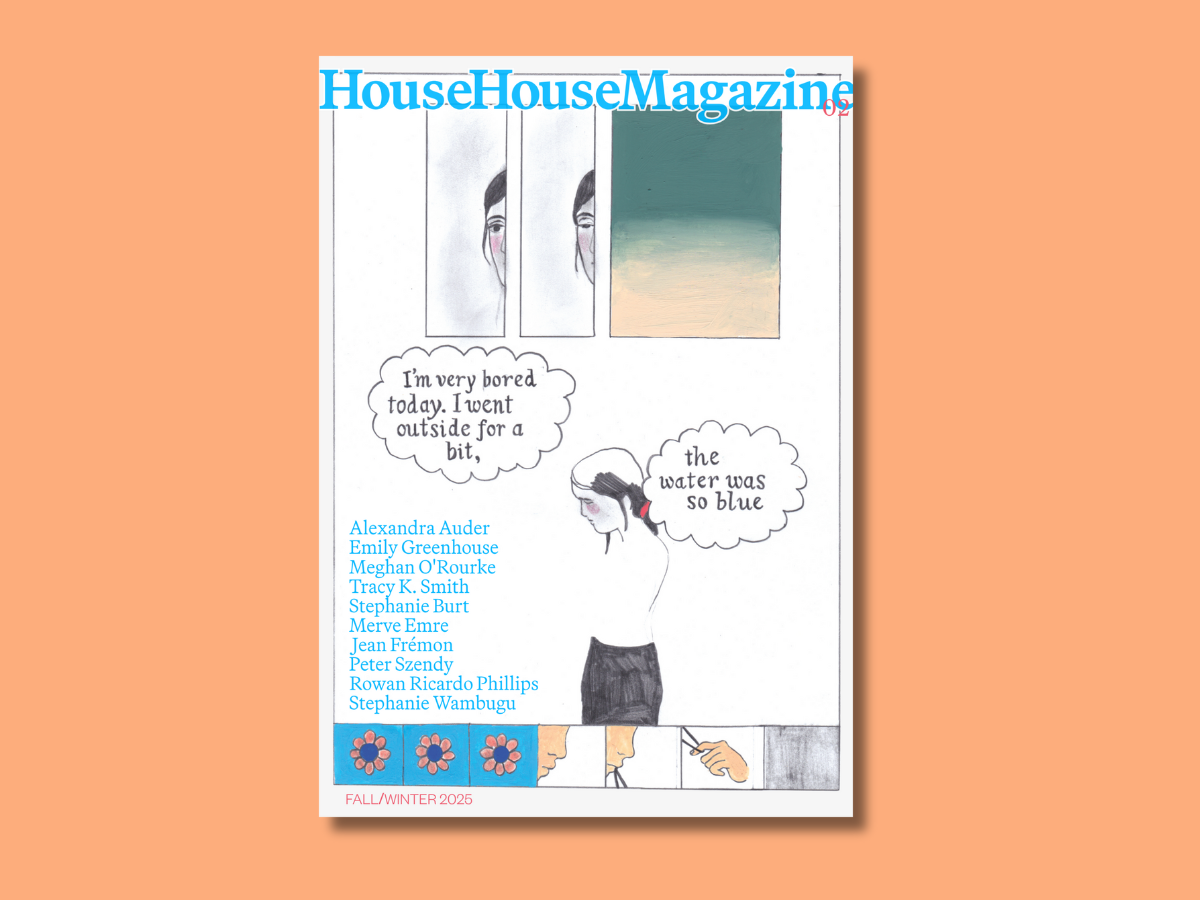
Editor’s Note | Attunement
THE DIFFERENCE BETWEEN the Forbidden Palace and Central Park, the codex of the Sphinx and the codes of reCAPTCHA, craft and technology, Bob James and 90's Hip-Hop, William Empson's Ambiguity and Wittgenstein's Game, a Brillo Box and Andy Warhol's Brillo Boxes, Pierrot le fou and Chantal Akerman's long takes, the “luxe, calme et volupte” of Baudelaire and Matisse’s namesake imagination of the rich Mediterranean landscape, Goethe and Schiller, the biblical “There is nothing new under the sun” and the Modernist “Make it new!”, a scroll and scrolling, scholium and the comment section, beyond the historical moment, necessity, and destiny, is before all a difference in the repetition of resurfacing, reemerging, resounding.
“There is only one pleasure, that of being alive”—the Italian polemicist Cesare Pavese muses in his diary as he lives through the two World Wars. In Extinction, Thomas Bernhard writes himself into the self-exiled late-Austrian protagonist, who, in a chance happening, commends Pavese to his teenage protégé, an act that immortalizes their lives in literature. Around the same time that Bernhard is conceiving his novel, Marcia Tucker curates a controversial show composed of “wires and scraps” at the Whitney, which gets her fired from the old museum, just like how the likes of Seurat and Signac are rejected by the traditionalist salon, and it only prompts her to start The New Museum. Richard Tuttle, the star artist from that show, goes on to meet many of the New York School poets and designs the faces of their books.
Is there really that much difference? Is there really that much sameness? The Alice Notley who wants to “be in this hell here / with you” all her life and the Alice Notley at the funeral of Ted Berrigan. Alexander Pope and Taylor Swift. Witness and lyric. Truth and morality. Illness and silence. Heraclitus’s most fervent votary, Cratylus, claims that “One cannot even step into the river once,” because the world is so restlessly in flux. “This World is not Conclusion,” Dickinson meanders into the same forking paths at the backyard of her homestead two thousand years later. Who says it first? The past always lives in the present tense, providing a veil of possibilities, glowing with the sun-lit springing sheen of silver, from which this issue of the House House Magazine comes to you. You must imagine it moving and still at once, as the surface of sea.
—Hengzhi Huang Yang, Cambridge
with the editors.