
SPRING/SUMMER 2026
Jo Livingstone Translates Time and Culture
interviewed by Emerson Rhodes
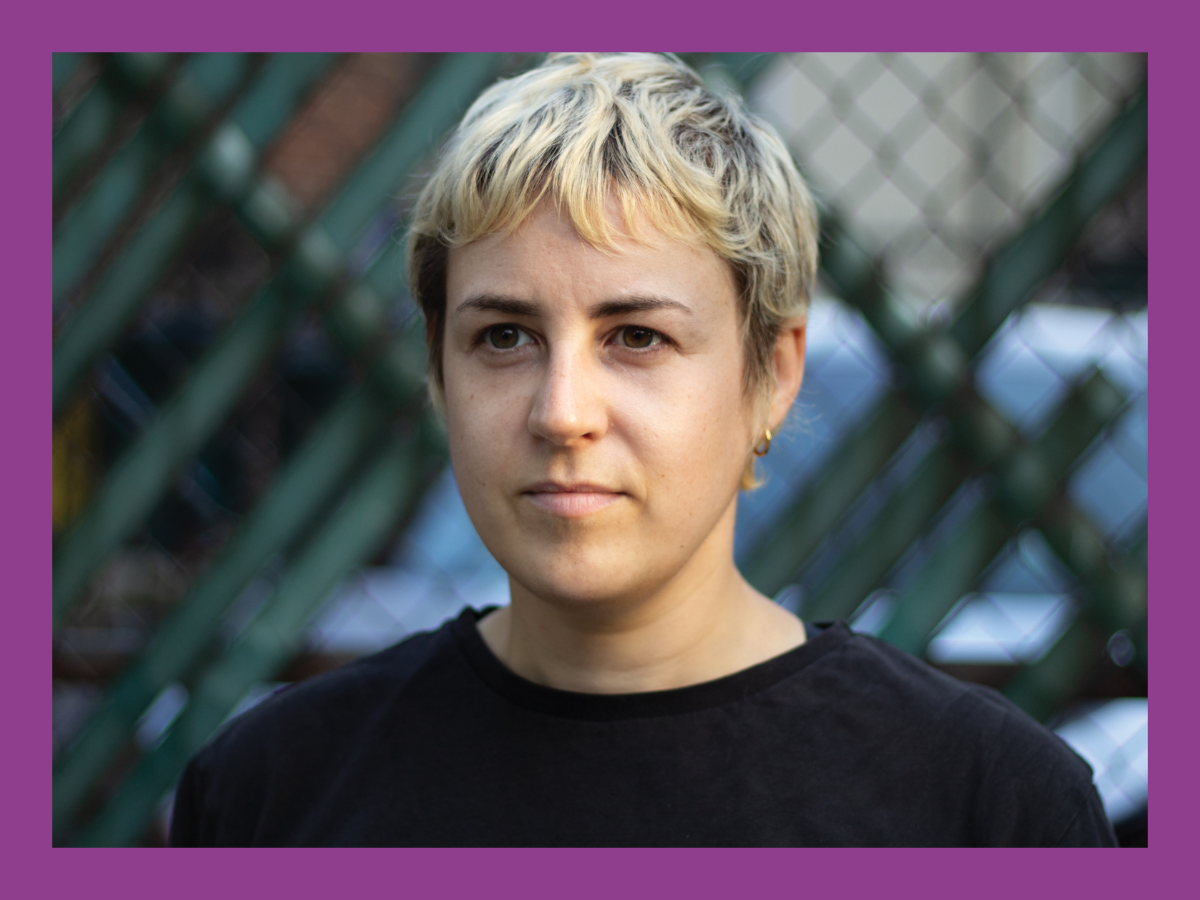
Photo: Jo Livingstone
Jo Livingstone is a British literary critic based in New York City. Formerly a staff writer at The New Republic, they now run the blog The Stopgap and teach writing and criticism at the Pratt Institute. A medievalist at heart and by trade, Livingstone has distinguished themselves from their peers through their keen aptitude for historical analysis of cultural objects both old and new, which informs much of their criticism. We spoke in June about Old English, translation, ethics in art and literature, independent publishing, the experience of being in between cultures, their ideas on teaching, writing, and editing, as well as the recent period of work culminating in their soon-to-be-published book about Margery Kempe.
EMERSON RHODES: In doing research for this interview, I read your “Letter of Recommendation: Old English,” specifically focused on kennings, and I was interested, just on a very surface level, do you have a favorite kenning?
JO LIVINGSTONE: Kennings are cool because they exist in modern Icelandic as well. I certainly don't really know anything about modern Icelandic properly, but it’s definitely a fascinating example. Okay, there’s a really, really great kenning in Beowulf—a lot of them are from Beowulf—and it’s heaþoswata. The heaþo is battle and swata is sweat, together it’s battle-sweat. It means blood, isn’t that good?
Especially because the idea that exertion leads to some fluid coming out of your body, but, violence and exercise as a kind of good. I think of how a kenning works: it just puts two things next to each other and lets them fight, just kind of rubbing against each other. They’re very balanced in that way; they’re very declarative; they don’t feel descriptive… It’s not quite what we think of as juxtaposition or the way we think of as putting an adjective or an adverb after a powerful word.
ER: Sort of in a similar vein, I think kennings are obviously very cool. You’ve talked about them meaningfully at length in various forms. Without your writings, I perhaps would have never learned about something as particular and fascinating as the brief history of kennings. You also wrote about poems of errata, botanical textbooks, and medieval artworks for an audience of general interest. What makes a subject interesting for you to write about? What has been interesting to you recently?
JL: I think anything can be interesting. For a long time, I worked at The New Republic as their culture staff writer and there were a lot of assignments, essentially. I’ve gotten a lot of assigned reviews over the years. And those were some of my favorite works. When somebody says, Hey, can you read this book about math? where I honestly don’t have a great faculty with it in the general world otherwise—that’s even more interesting, because then I have to confront, Why don’t I really know much about this? What is kind of repelling me from it?Is there something that can now attract me from my place of ignorance? Sometimes the challenge becomes how to put together the argument around something, and find the path towards my interest, and back out again.
For me, the thing which ultimately matters is the fact that the piece, specifically a review, can hold itself together internally. I got the most amazing piece of advice years ago from my first ever editor, who was a friend of mine that I grew up with in London—now he’s an editor at The Guardian. David Wolf is his name, and he said Imagine your ideal reader as like a really intelligent 16 year old, but from outer space. They can understand anything if you explain it to them properly, but just imagine that they have no background knowledge on the subject matter of the essay at all. I found it to be incredibly helpful to assume a lack of information, while also assuming ability. That is sometimes what you learn about yourself when you’re writing about something that you don’t really know much about, the process of saying Oh, I’m okay—I’m capable of reading a book. Books are pretty user-friendly technology in a way, and so sometimes to be taken to somewhere entirely new by them is just so wonderful.
Right now I’m quite deep in medieval stuff, but I was just picking up and looking at this book called Voice Machines by Bonnie Gordon that I reviewed for 4Columns a couple of years ago, about the castrato in early modern Italy. I was looking at it and thinking, It’s such a good book. People just write the best books, and it’s not like anyone’s going to give them any great reward for it—except now I, a reader, get to discover a tiny bit about the subject that was someone’s life passion.
ER: Speaking of your work in medieval studies, how do you feel that it seeps into your analysis of contemporary media, for which you are simultaneously known? Do you find that you’re nostalgic for certain qualities that exist in medieval literature that aren’t existent in contemporary modern media, or vice versa?
JL: I think it seeps in all the time, in part because it’s a very structured type of study. What do you study?
ER: Comparative literature. My focus is in translation, but I do that between English and Portuguese, so I have some English background.
JL: That’s so great. You get it with translation—when you’re doing that very granular—sifting sentence-level work and line-level work… I think people often talk about translation being a puzzle, trying to make sure that everything fits together. To me, that was in fact what studying medieval literature is like. It’s funny, because even when you’re studying—say English medieval literature in England, or French medieval literature in France, or Ethiopian manuscripts in Ethiopia in the Middle Ages—you first have to learn these standard and old-fashioned forms of knowledge, such as philology. These are disciplines that were developed by often really deranged people in the 19th century with often quite intense agendas about cultural ideas. Some of them thought that they were recovering the true ethnic roots of a European culture, and there were English people in India who were like Oh, I think I understand the Indian village, but only if you look at it with respect to the Anglo-Saxon village.They’re just like us 1000 years ago. There’s so much ideology baked into what feels like a very “neutral” type of knowledge, and so I think I gained a lot of confidence about reading beyond the surface.
I don’t know if you found this in your ability to follow an idea from one language to another. I think it gives you confidence to just translate critically and analytically. It gives you confidence to write in a way, so I think beginning almost as a translator of history within the English language, firstly gave me the confidence and also an intense awareness of the origins of literary criticism in English—and in Europe writ large. Literary study, long before people were studying the modern languages, was Latin, Greek, a little bit of Sanskrit, and then well into European philology. What they were doing was quite peculiar, and different to what people do now in universities. A strong awareness of the institutional history to the form seeps through to my criticism of contemporary culture. Maybe nothing feels unapproachably mysterious anymore if you have a lot of training in a sort of abstruse field that other people around you naturally find mysterious.
ER: I see everyone having their own grand metaphor of translation, but they’re all quite negative. They’re all something on the lines of translation is failure; translation is like inherent misalignment; there’s no true translation. You mentioned translating as “writing.” I don’t know how you feel, but they certainly make the act of translating a little bit daunting, especially when the one of the first things you read in the field is David Bellos’s saying, “You're never gonna get it, it’s just not gonna happen,” and that is supposed to be freeing, but you read it and you’re like, What’s the point then?
JL: I know, and it’s like, sure, if there’s no success, that also means that there’s no failure. It’s not as if there’s a big committee in the sky that’s gonna like strike you dead when you fuck it up.
ER: Except for all other translators who love to read and comment: I would have done it differently…
JL: I believe that’s the other thing about working in Old English: there are many millions of people who speak Portuguese in this world, and there are truly few people who read the medieval languages. Honestly, I think that for a long time I felt like I worked in complete privacy, if not disconnected from the rest of the world. That’s really what I wanted when I was in my twenties, when I was in graduate school—I just wanted to get away from the world. There was a recession and no jobs and I wanted to be able to make a little space in a room with the door closed that was outside of time. I was trying to be out of language and out of conversation with life as I had known them, just like with translation, but I had to make a living. I don’t know about how you feel about this, but sometimes translation does feel like you’re floating with the dead.
ER: Do you find that now you want to be more in society, or more in the world?
JL: Yeah, I really discovered that people care. People really do give a shit still about books and movies and their feelings about them. Even if what they have to say is not always… Well, it’s variable. Once I had all of that time away to think about “the landscape” in medieval literature, which was one of my concentrations, I was delighted to discover the world better than I thought it had been when I had left it.
ER: Speaking of criticism and the scene(s) of criticism, you have a very interesting place of both being British, but then having written for a lot of these American publications. Do you find that there are notable differences between the two scenes?
JL: I do. It’s funny because there are Americans who write predominantly for British outlets and live in the UK, and then there are folks like me. Obviously then there are a bunch of other editors and writers who are from other countries and live in New York, so I think on the one hand there are the conventions of the literary publications of each place, and—this is a huge generalization—someone told me that London Review of Books does a really strong line in “describing things”. In the LRB, you’re going to read a really long, beautiful, rich description of a book, and that’s not what the literary critical outlets in New York traditionally demand, which is more often a really internally highly structured argument from beginning to end—Not too long. We don’t have all day. Let’s wrap it up in 1300 words, and address everything you said that you were going to address.
I don’t really consider that I could speak to any national character or anything that comes through there, just conventions, but beyond that, I still have a lot of great friends back in England who write and, I still feel very connected to the place. I go back and travel around there a lot, and travel around here, and people are mostly the same. In terms of the way that you meet someone and you talk about Rachel Cusk, and you all kind of agree and you’ll have something to argue about. That is a total unity, though. I do like the American style. When I was younger, I couldn’t get an internship in publishing back home. I don’t think I would have had the confidence to do it in England, whereas in America, no one had ever intimidated me, because I simply hadn’t been here.
The other thing is that to me the UK is also quite a strange place—I do love London, I was born and grew up in London with some stints in other places. My family lived in Hong Kong when I was really little, and then mostly England, but my dad’s from Namibia, and my mom’s from South Africa. I have extended family of all different types of people, so in a way I was always related to a lot more people outside of the UK. It all made sense instinctively to me, because, when you’re a kid in a big city, people are from everywhere, and you don’t really bother to try and understand how we all got there, you know? Nevertheless, there’s this extremely close and at-hand prompt to want to learn about the world, the 20th-century history of the British, and the recent historical repercussions of a long-ago colonial mission that felt very up close and very raw to me growing up. From quite a young age, I think I felt very disconnected from the places around me. I mean, I was connected to all my friends and surroundings in London, but still I’ve always just seen it as a really strange place… America is also strange. New York is super strange, just in different ways. I guess that’s all just to say that I don’t actually feel like an export, if that makes sense. I don’t think that you could pick up a Daily critic from the UK and move them to America, and expect that people would be into it.
ER: I think what you’re saying about formal cultural differences is interesting, thinking inversely about content… this is a larger question, but as a critic, how do you feel like you square art and artist, and what do you feel your thoughts about that relationship are?
JL: I have a strong opinion about this, which is that I don’t think that we should ever have to give anything back. I think a really classic, overdone example is the films of Woody Allen, right? I think that he’s a good prompt to this discussion in a way that’s actually kind of helpful, because his films are very, very close to people’s heart, because they’re very sentimental pieces—which is interesting in and of itself. However, Manhattan Murder Mystery is one of my favorite films of all time, and I’m just not gonna give it back—that’s not fair.
When you create something and you give it to the world, you lose your rights to all of it, including the ability to revoke it. I don’t know how you felt, the first time you read “Death of the Author” and all that stuff, but I was like, Yeah, like this is great, this just detaches the whole structure and kind of melts it in a way. As a student of translations, obviously, that kind of response probably feels familiar, that feeling of the artifice of your writing bouncing off you into the broader world.
Then, you know, medieval literature often contains a lot of sexual assault. There’s a lot of super outright racism. There’s a lot of really fucked up stuff, and that’s fine. I want to know what people really think. Also, sometimes I feel like with criticism you’re trying to unpick whatever the writer was trying to protect themselves from being perceived as. People are often trying to cover up something about themselves at the same time as publishing something out into the world. I think strangely, that like anxiety over What will this mean for me as a person once I put something out there? I think it almost just makes us anxious writers and sensitive, interested readers in a way.
ER: I tend to agree. I feel like I separate art from artists at times, because no matter how much I think I fundamentally believe that a piece, once the author releases it, it becomes the viewer’s. But if I buy it, spend money on it, encourage other people to spend money on it, I do feel that lingering guilt of consumption, you know, Do I feel like I endorse this? My most cynical take on it is: How good is your art to divorce it from what you have done?Is it worth parsing any meaning from this… Sometimes it’s really not, because sometimes if you make mediocre art and you’re a terrible person, the art is worse for it, because now I don’t even want to engage with it on any level.
JL: Yeah, kind of like All of this could have been avoided?
ER: Yeah, but I was interested in what you said about the Woody Allen thing, which is that, you don't want to give it back, even if he “revokes” it. Do you feel like Woody Allen wants to revoke?
JL: I think more in terms of that the social contract exists now with the arts. I really understand why people on the internet, on social media, or on Reddit, are very much stuck in this place where people say That character shouldn't have done that. I think it’s actually really natural that we have those feelings when we read something or write something. Naturally, we want to yell at the author or argue with the director. I think that those anxieties or those confusions are just drawing further attention to those acts of creation and what it means to be a person. Basically whatever people are doing, even super dumb-seeming stuff, they’re having an interesting thought.
With Allen, I think something culturally interesting is happening, I don’t think he’s trying to revoke it, but I think that he’s broken, let’s say laws, but to generalize the case, it’s not because he’s broken the law that people are angry—they are angry because he caused real harm. So having that kind of like social tie of the role of this extremely city-identified filmmaker, a local guy, the fact that he’s here is a big part of it, so that kind of the relationship that he had before with the viewers is broken, but I don’t think that that means that it changes the relationship of the work to the place in a way. It sounds super cliched and stupid to pose the idea that Woody Allen movies belong to New York, but they kind of do. It depends on the movie.
I think even when everything outside the work breaks, the work is protected by the fact that people don’t get to edit their novels after they’ve published them, or recut their movies—it’s done. Almost like that at the moment of publication, there’s a moment where everyone's like Now the thing has its own life and existence for sure. I think that’s it. It’s that moment when you decide when someone says it’s finished, then it has its own weight. And if you want to get rid of this, you’re gonna have to really pick it up and move it.
ER: Absolutely. Still very much in that vein of finished work versus work that’s still like being created—you now teach at Pratt, and do you find that when you critique students’ work, your critical register shifts, and in what ways do you find that it shifts versus reviewing something where it’s a finished piece?
JL: Yeah, that’s so great. You’re released from that critical obligation to have a totally coherent response to the work, because it’s not a formal conversation where the artist completed what they have to say and now the critic is supposed to give the critic’s talk. It’s more of a chat, but for me, I like to see and try to understand what the moving parts are in a work in progress. It is so fun, especially because no one knows what the moving parts are, not even the student. Searching out, the artist often thinks they are doing one thing, but they are actually doing another.
Let’s say someone’s working with the design of paper money that they’ve worked with, experienced, and used all their lives. As soon as you start taking something from your everyday life and giving it that kind of attention, it turns out that everything else that’s been going on: every time you picked up a bank note, when you were in the market, or when you were buying a train ticket, all of those other things are there. The joy of doing creative work is that you have to let go a little bit. I’m sure you have that feeling sometimes where you have to go a little limp and let go and just kind of like see what comes out of the miasma of the mind. A great joy to me is when a student has their subject, they know that there’s something pulling them towards it, and they’re not quite sure yet of their relationship to it. That's something that I love to offer. Teaching is always a puzzle, and it’s always such a joy, and every student, every week, has something completely different. It’s so, so joyful. I love it so much.
ER: Totally. A bit of a pivot, but since we are talking about your current role as a teacher, I’m curious about the other various roles that you play. You were writing at The New Republic for a while, which is this longer-form, conventional kind of criticism, but now you’re writing and editing for The Stopgap, an online publication that is shorter and also occasionally more in the first-person “I”. How do you feel about these different features? Do you feel differently about writing in those modes? Does it feel harder, easier?
JL: Gosh, well, when I was getting started, I started out writing for The Awl, and that was kind of my outlet for sort of bloggier or looser writing. I really founded The Stopgap with Danny Lavery, in part, just because I didn’t have an outlet for anything that was an unfinished thought. One thing that I had gotten pretty much used to from my years at The New Republic was publishing something every week; something that I could have a conversation with someone about. But I wanted a kind of lifeline out of that regularity, and to me that’s just the way The Stopgap functions: as I have an idea and I have to get it out, otherwise the idea’s being knocked around in my pinging around in my skull walls. It’s also a place where I can publish other people, which is great.
This band wrote to me a couple of years ago, saying We’ve just made an album about wind turbines, and we just met this painter who’s just made a film about wind turbines, and we were just wondering, can we publish an interview between us about wind turbines? I was like, I’ve never had such a wonderful question, this is like the best thing that's ever happened. That was such a joy to me—it’s so oblique, so unique, and I think it’s really important to have a messy sketchbook where things that don’t matter can go, and the internet is so lacking in those places, so I just need it for myself.
Now we have set it up so that we can raise money and pay money out, and that’s the only financial aspect to it. It’s a thing called “fiscal sponsorship,” it’s like a tiny, tiny nonprofit under a larger umbrella, and I don’t have to do my own bookkeeping. It’s pretty cool, so that way I don’t have to raise enough money to pay a staff or have a business. When we first started we didn’t offer writers payment, but we got some justifiable criticism and so I figured it out.
ER: You said the internet’s lacking those imperfect or drafted places, do you feel like the internet is very polished?
JL: It’s in a funny state right now. I do see that now there are not that many writers who are allowed to go between the registers of stupid jokes and long-form criticism, and I believe it used to be looser on the internet. Maybe back when there was more independent, scrappy publishing.
There is totally a revival now of people doing it in a more conscious way, creating worker cooperatives and stuff, like Hell Gate, Defector, Coyote—and so there is business scrappiness. The unions are doing better work than ever organizing traditional media and in devoted organizing spaces like the Freelance Solidarity Project of the National Writers Union. But these contexts are not stupid at all. So for me it leaves the question of how to find and integrate the spontaneous, or truly joyful, part of the internet under these conditions of social monetization. Because the media internet was relatively new when I started trying to do criticism, I think I was lucky in that I did not have to try to build a big social following to drive my other work and I had tons of people to learn from and copy in real life, rather than at a virtual remove. I’m not publishing all my greatest personal essays that I should be keeping for my essay collection on Instagram, because that’s not how I personally am capable of making my money, and also I don’t think that most people who read my “real work,” as it were, really know anything about me as a person, or are very interested, which is either incredible luck or something I owe to the generosity of my editors.
Also we live in a really heightened and hateful time, and sometimes I’m shocked by how little hate mail I got over the years at The New Republic. My editors Ryu Spaeth and Laura Marsh were always rigorous, which protected me from my own mistakes. It was still kind of a lot, but that’s the thing about how you’re going to be as a person on the internet, as that relates to your purpose on this earth—it’s very uncomfortable and very weird. And it’s not stupid to think about—do it or it will be done for you. I feel lucky that I got to somewhat establish how that was going to work for me—at least in my mind—early on, and just that it’s okay to be a person on the internet. But, I don’t need to actively cultivate any kind of person-led or celebrity-esque following, which means I can live in a non-monetized way socially. It isn’t wrong at all. I just think I would find it incredibly overwhelming to live a social-forward writing life and I greatly admire the writers who can do that kind of real-time diaristic style, integrated with photography, etc. You’ve got to be able to choose.
ER: I know that’s what you’re doing now, but I want to talk about the future a little. I think I said that we would talk about this at the beginning of the interview, so we’ll bring it back, but you’re writing a book, how is that like going as a process?
JL: It’s good. When the deadline finally gets there, it’s actually such a release. I don’t know how you get about this, but my whole life, when I have exams coming up, I had to work at my local library in London, where I grew up. I was just obsessed with it. I would just go and sit in the library and be like If you're going to eat an elephant, you have to do it one bite at a time. That’s key, is to make yourself start, which is harder than it sounds… Wait, what was the question again?
This book I’ve actually been writing for about 12 years—conceptually, but also literally as well, because there are some sentences that I’ve finished or half finished for the past 12 years. It’s to a point where I’m telling myself that I cannot read this again. If I read this sentence one more time, my heart will stop, and I will fall on the ground dead, but I never actually die. So, I just have to write the next sentence. It’s really fun. It’s really wonderful. I finally sold the book last year. The fact that it exists as a book is enough for me to be happy. When I was about to finally sell it, it was huge—so huge. Do you have a favorite secret, or most beloved project that if you ever published it, you could then die, and it would be okay?
ER: Yeah, but I’m not gonna say that in the interview.
JL: Totally. I wouldn’t have said it either until I actually saw the book get arranged; a year ago, if a comet came out of the sky, I would say, Dang, we're all about to blow up. I never finished my book.
Now that I’m actually doing it—I’m actually publishing the book—I’m like, I want to do 12 others. But this is really this one story that I feel like I really need to get down. It’s about the rediscovery of The Book of Margery Kempe in the 1930s and the medievalist who made the identification, who was an American woman. Just learning about the story at university as an undergraduate, I knew immediately I had to write about it. I remember I came up with the shape of the book before I went to work at The New Republic, and I was like, this isn't good, like, why isn't this good? And then I remember realizing, Oh, I'm gonna have to learn how to write—really learn how to write to do this.
When I started I could read the languages involved, and I understood what happened. The story is sort of interesting, because the woman who made the identification in 1934 got pushed out of the scholarly edition that was hers to make and lots of strange things happened. And then when she first appeared, Margery Kempe was widely rejected by the literary establishment, people thought that it sucked. When I started, I had the tools to understand how and why that happened, but I had to learn how to do narrative literary criticism so that I could tell the 20th-century part of the story. I felt comfortable writing about the 14th and 15th centuries, but not comfortable at all writing about the 1930s. I really feel like it took me all this time to figure out how to do it, and now I'm doing it, and it’s great.
ER: Sorry, jumping between the time periods, what specifically about criticism do you feel has enabled you to do that?
JL: You know how when you're speaking a different language, understanding what people are saying to you, and nodding along while saying a few things in a conversation is totally different from actually opening your mouth and delivering a paragraph of original composition? It's kind of like that.
I think that studying medieval literature as an undergraduate, then as a graduate student, gave me a lot of confidence to believe in what I thought. (It maybe gave me too much. I definitely come off as an embarrassingly overconfident person because of fighting to speak in small seminars.) But I struggled to find the ability to be spontaneous in another modern language. In translation terms, I like to translate, and to feel like I could understand some stuff about the history of the language involved, and then with doing criticism I had that same kind of conversation, but with contemporary culture. You just keep hearing conversation, conversation, conversation, and then finally one day you're like, “Hey, what do you think about the news?” and you've just said something original. Your original composition has happened without you noticing, because one day the confidence and the wherewithal has led you to at least enough knowledge to just start a conversation. That's really what it feels like to me. It's such a big difference, it gives you such a different sense of your participation in your role in that place.
Maybe what I’m saying in a review is totally unreasonable and stupid, but it’s coming from a real place, you know, it’s what I think, and that’s just so exciting. It doesn’t feel like having a mastery, in the sense of I’m the boss of these parts of the history of art. It’s more just like I feel like I genuinely befriended this material.
ER: To close out, we talked a lot about your own writing process, your understanding of the relationship between you and your subject, and your ideas about the reception of a piece of writing or a cultural product. Since you engage with criticism on so many levels from the most institutional—at The New Republic and The New York Review of Books—to the most casual and online—at The Stopgap—do you think ever about, say, in 10, 20, 30, or even 100 years from now, would there be certain things that you hope people take from reading the criticism you’ve written, or things that you’ve written?
JL: Oh my gosh—that's great. You know, I really wonder, in 100 years, if people will write about #MeToo in 2017-18.
ER: Oh, and why #MeToo more than anything?
JL: Because I think it really holds so much together. Let’s optimistically assume that Black Lives Matter will be a serious subject of study. How will we see the relation between the two? 100 years from now, it’s gonna be before Epstein, right? Before it turned out that actually there was this literal global conspiracy of the elite rapists and pedophiles, there was this big moment of believing everybody, and then this huge retraction of that belief.
Writing through it was very surreal, because you know, I was the culture reporter, but getting a lot of assignments, where people would ask Can you respond to the latest crazy opinion piece that came out about how #MeToo has gone too far, or try to speak back and just say what seems to be sensible, self-evident things, like You should not kiss your colleagues without asking. I felt like I was explaining to people much older than me incredibly self-evident ethical situations. I think that came through in some of my writing of the time that was just this frustration with the very everyday foolishness of people much older than me, and honestly, I believe that it could be so interesting for a future historian to try and pick out if you read the subtext of everybody’s literary criticism in 2017. There were also a lot of young Black women writers who came up through MTV News or Jezebel, who were writing really super sharp and intriguing literary and art criticism at the time, alongside reporting on both movements, and I’d love to see a historian make a narrative about their influence.
In deep retrospect, too, right before the collapse of Hollywood, right before so much fell apart, I think that it would be so interesting to look at the first Trump administration and art criticism, personally. As far as what I would want someone to take away from my work—I don’t quite know. I’m not sure that it will be worth reading in the future. I wrote this one piece about The Conjuring and Catholic theology that I think would be kind of helpful. So maybe that would be the one. The Conjuring and the Catholic Church are why people are afraid of really long manicured, gay-seeming demons that like to come out of the night in your own home. I think that’s the most helpful analysis that I’ve done, explaining that those demons are gay.