
FALL/WINTER 2025
Roundtable: Emily Greenhouse and Meghan O'Rourke
interviewed by Mia Rei Foster
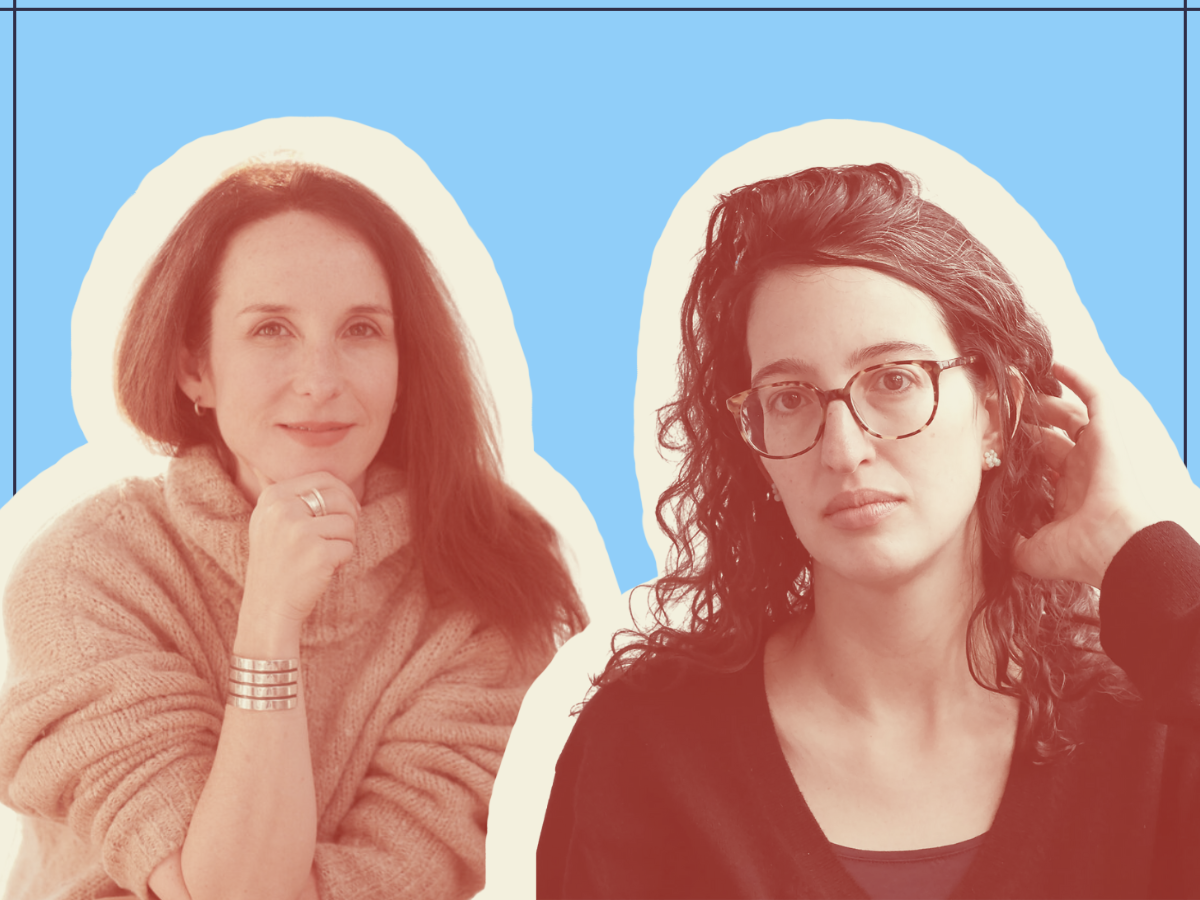
Photo: Meghan O’Rourke (left) and Emily Greenhouse (right)
Emily Greenhouse is the editor-in-chief of The New York Review of Books, a magazine renowned for its in-depth essays on literature, culture, economics, and current affairs. Founded in 1963 during the New York City newspaper strike by Bob Silvers, Barbara Epstein, Jason Epstein, and Elizabeth Hardwick, The New York Review of Books was conceived as a publication that would enlist the most interesting minds of the time to pursue books and ideas with uncommon rigor.
Greenhouse’s career began nearly half a century later. After working at Granta, The Nation, The New Yorker, and The New York Review of Books, she returned to the NYRB as its editor. Under her leadership, the magazine’s coverage remains as exacting as ever, while evolving to meet the demands of the modern age. Guided by both her staff and readers, Greenhouse has steered the publication toward writing that inspires and challenges—balancing pressing news with philosophical inquiry and enduring literary criticism.
Meghan O’Rourke is a poet, memoirist, critic, and the editor-in-chief of The Yale Review. The two-hundred-year-old magazine has published writers such as Virginia Woolf, Robert Lowell, Thomas Mann, Bayard Rustin, Louise Glück, Adrienne Rich, Joyce Carol Oates, James Merrill, Cathy Park Hong, Sheila Heti, Garth Greenwell, and Namwali Serpell. Since taking the helm in 2019, O’Rourke has revitalized The Yale Review, reestablishing it as one of the most dynamic literary magazines of our time. She has also worked to democratize access to both its writing and its editorial process, transforming The Yale Review into a space where students and emerging writers can engage with the world of publishing.
Together, Greenhouse and O’Rourke represent a broader generational shift: legacy magazines bringing in new editors—often women—who are reimagining what these institutions can be in the 21st century. In our conversation, they reflected on the evolving nature of the editor’s role, the responsibilities owed to readers today, and the challenges of sustaining a living, thinking publication.
We spoke over Zoom on October 21, 2025. Our conversation has been edited for clarity and length.
MIA FOSTER: Thank you guys so much for talking with me today. Both of you have begun your careers at storied publications. I wanted to hear about your respective paths to running The New York Review of Books and The Yale Review, and how you think about bringing the experience of working and contributing to a writing community like a magazine to a younger generation during this strange time for print media.
EMILY GREENHOUSE: My father is a newspaper reporter, so I grew up very enamored of this world of newsprint and of the general principle of speaking truth to power and publishing truth both against and about power. And when I was at college, I realized that I was more drawn to literary or creative nonfiction and that I was more inclined toward magazine work. I graduated from Wesleyan in 2008 at the tail end of the editorial assistantship slog. I had done an internship at The Nation, was working at an Alternative to Incarceration in Mott Haven in the South Bronx, and taking a class with the writer Dani Shapiro. Dani said, “I think you would really like working in magazines. You'd be an asset there,” and that was sort of how I alighted on this field.
I did a number of editorial assistantships at magazines, because those were the entry-level jobs.
Things have changed since Meghan and I were in those kinds of junior positions, but the work was still a lot of getting many different coffee orders throughout the day, just anything that anyone needed. And then at TheNew Yorker, I got more involved in the text and reading with the editor for whom I worked, David Remnick.
When I started at The New York Review of Books, it was really a priority for me as a nepo baby—I mean, being the nepo baby of a labor reporter is its own special category—but as someone very aware of workplace dynamics and of the need for healthy and open workplaces, especially in this siloed, narrowing field, it was important to me to start an intern program with a public university. So I started a paid internship with CUNY—an internship program that has now been around for six years—to try to open the doors and expose people to this world of critical thinking, which should not be elitist.
MEGHAN O'ROURKE:I didn't know anything about the world of magazines. My parents were teachers, and I came to magazines through reading and writing. When I was a student at Yale, I found myself not only taking writing classes, but also being drawn to the campus culture of literary magazines and The Yale Daily News, which I got to write and edit for. I vividly remember writing my first piece and falling in love with the editor-writer relationship. The notion of having an editor who would pay attention to my work and try to make it better just seemed like the utmost privilege. Given that writing is a lonely sport, and writers are often lonely people, it seemed so lucky that we had come up with this model called “the magazine” in which we could no longer be alone in our rooms, but actually in a place where we are engaged in the social practice of thought.
So I came into Yale vaguely wanting to be a writer and thinking I would get a PhD. But, quite impulsively, after the experience of writing this piece, I applied to an internship with The New Yorker in a department then called “Word Processing,” where we took pieces that were faxed and typed them up. I applied totally cold. I figured I would never get a job, but I got the application in under the wire and was the last person they interviewed for the internship.
One thing I had going for me was that I read The New Yorker closely, everything in it: the poetry, the fiction, and the nonfiction. So I got hired, and it was a moment when you got to do the interesting work of taking manuscripts and typing them. In those days, editors edited by pencil. I got trained to use QuarkXPress, the page formatting system—from all of these different editors—taking their marks and putting them in, while also putting the fact check and copy edit on. It was this incredible training because not only did I get to see how editors edited, and what they changed, but also what fact-checking and copy editing were: the many layers that went into making a piece publication-ready. I fell in love with it, I couldn't dream of a better job.
So when I left Yale, I went on as a temp at the Word Processing Department. Then an editorial assistant position opened up in the fiction department. That was when I got a deeper training in what it is to run a magazine. I was working for Bill Buford, who had started Granta, a magazine at Cambridge, which he remade into a very spirited, small magazine that had a real impact on literary culture, which is relevant for what I do today. So that experience of being at The New Yorker gave me the sense that you can take a morass of language and thinking that is deeply interesting, but maybe not all there, and, through a logical process, move it from that state to something shiningly incisive without losing what the writer is trying to do. That's something I bring to The Yale Review.
When I arrived at The Yale Review in 2019, I arrived knowing that The Yale Review’s star had fallen. It's a very storied literary magazine. Its modern incarnation dates to 1911, and it has published Virginia Woolf, Bayard Rustin, Edith Wharton, and on and on. But when I arrived, it had very few subscribers; no one was reading it. When I was teaching at NYU in the MFA program, my students didn't even know what it was. So I saw my job as having two pieces. One was to elevate The Yale Review as a literary and cultural magazine in the world at large. The other was to bring The Yale Review home to Yale and to make it an equitable training ground for students with a wide range of interests, students who cared deeply about literature and public thinking and writing. We created a several-tier training program, including one that's volunteer-based, an internship that is fully paid, and a full-time summer job. And we actively look for a wide array of students because we think it's deeply important that we're a space for the history junkie who wants to write about history for a broad audience, or the art student who cares about art criticism.
MF:That's wonderful. It’s such a rare opportunity, and one that's dwindling. As publication, or writing in general, has become more disjointed, on Substack, or whatever it is, learning from enduring publications is such a lucky thing. I admire both of your publications very much for bringing these experiences to young people, upholding the traditions that allowed you to have the experiences that made you into the editors that you are today.
That brings me to my next question. Both of you touched on your academic and creative backgrounds. I was curious, Meghan, with your work as a poet and a writer, and Emily, with your background in the world of journalism, if you feel like those experiences influenced the way that you view curating a magazine and your work as an editor in general.
MO'R:It's completely shaped how I think about both editing and being the editor-in-chief of something. My editorial experiences so far were as a fiction and nonfiction editor at The New Yorker and as a poetry editor at The Paris Review. These are isolated, singular pieces you're helping; whereas, as an editor-in-chief, you help create the whole. I felt very lucky, or equipped, when I came to The Yale Review, because it publishes a lot of poetry and fiction alongside what aims to be among the best criticism being published. So when someone in the committee asked me to apply, it was hard to say no, because I was, in a way, made for this job. I'm a poet. I've been a poetry editor. I've edited fiction, I write criticism, I write personal essays, and the opportunity to shape something as a whole was truly exciting to me.
There's a creativity in that shaping that's markedly different from the day-to-day work of being up close with a writer as a kind of unobtrusive, thoughtful presence, helping them with their piece, which is work I deeply love, but this was new. The thinking was like, How do we make a collection of pieces into something more than an anthology? How do we give it a kind of identity?
I was very happy as a part of the creative writing faculty and writing my books, but I missed being in the ferment and foment of magazines and helping think about the culture at a moment when so much of the discourse feels so reactive and impoverished. It's a little bit like an addiction. The writer in me is always fighting for time and quiet, and the editor in me is doing the opposite. My life and my mind, and my thinking are enlivened by this work as hard as it is, so the two are oppositional but deeply entwined.
EG:I'm so full of admiration, Meghan, for you and your polymathic tendencies—and the sense that you have not only dabbled, but deeply engaged with many different forms, as you are both writer and editor today.
I can't overstate how much I was reared in the world of newspapers. I moved around a lot for my father's job, and never felt extremely rooted in a place other than “The Newspaper.” It is with that reverence toward the work of reporting, and because my father was writing about unions, that I was very much thinking about the plight of workers.
I think that my work and history in this industry have been because of the place of these institutions in a crosscurrent in culture. I was working as a reporter when my old boss, David Remnick, called and said, “The managing editor has just given notice. Would you consider coming back?” I had not at all seen myself in that, but I think I have an extremely extroverted, affiliative, social, busy body, nosy mind, and the work is very, very relational. I just love and am entranced by people.
When I was tapped for this job, the co-founder and co-editor of the magazine had died a couple of years prior, and the magazine was trying to find its footing and define itself after the founders’ deaths. For me, it was a project of cracking open the culture of this magazine. I had worked at this magazine for a brief time and had come to understand its hierarchy and what the magazine stood for. I think I have been placed in positions to try to make progressive institutions as progressive as they can be. I don't feel as though I was placed on this earth to lead a magazine whatsoever. But I do see The New York Review [of Books] as an extremely august and important institution of the letters of criticism, of the defense of criticism, and what criticism is in democracy. We've just published two wonderful pieces about what critical authority is and what the act of responding to the happenings in the commons does, and again, why that response is not elitist or pretentious, but why it is, in fact, the soul of engagement, of democracy.
For me, the task has been learning how to be a steward of this particular magazine, and how to make the magazine in this imperiled time, both nationally and economically, when this industry is suffering so much.
MO'R:It is really hard. We are in a moment when these institutions, always already quite fragile, are really at risk. They're quite economically endangered. We're facing a very different and much more circumscribed future starting next year, because of the way that funding has changed due to the endowment tax.
But one of those challenges, and one reason that historically small magazines have only lasted on average five to seven years, is the change in leadership from visionary founders to a second leader, a new generation. And Emily, it's no accident that someone like you, whose home is the newspaper, who has this very relational practice as an editor, which wasn't focused on as a part of editorial practice in the past, has taken over.
EG:Wonderful euphemism for bringing in women as editors.
MO'R:Totally, but you are an extraordinary steward.
EG: I hope so. Every day we're up against, “Is this magazine going to be okay?” Because that's the work of a magazine. You try to get it right, but sometimes you get it wrong, and then you do it again, and again. That's how it always works. We're always trying to be the best version of ourselves.
MO'R:Yes, that's exactly the work. From the outside, that's probably what's hardest to appreciate. How every day is just as hard as the one before, and how you're constantly on the brink of mistakes.
EG:I think there has always been this culture of duty and reverence. Now it's different and more empowered, because with a flatter moment in media, obviously, social media and newsletters have given the positive tools for publishing to many, many people. And it also slightly throws people like us on our heels, since I have never seen myself or would see myself as a gatekeeper. But there are also standards that we are trying to keep, even as those standards shift. In work like this, we are also trying to draw more people in. I don't know if I can inspire anyone to write criticism, yet oftentimes I'm reaching out to someone who has never written a 3800-word sustained, argument-driven essay, and saying, This is why I think your idea matters, and this is why prosecuting this case actually will help in the cause of truth and beauty and human rights…
The reading public, as it is, as it ought to do, will often perceive something different in what you've put out than what you expected. I feel lucky and grateful, especially to my younger colleagues, for helping me, on occasion, catch certain overlaps or unintended errors. We're constantly learning, and as language changes, we all try to be as sensitive as possible to those changes. But we do risk being misperceived or sometimes publishing the wrong thing.
We're always beholden to our readers, and we hope that we're not misconstrued. At its best, our staff is a microcosm of the way things might be. I try to anticipate how something will be read and how the cacophonous jumble of an issue, ten to twenty disparate arguments put together, will be perceived. And I try to make sure everyone comes to me if they notice something, or have a problem with something as we're producing the issue.
MO'R:What I'm hearing Emily talk about are two things one thinks about all the time as an editor: one is your readership, and the other is your team and your staff, as well as your writers. We now house a series of classes called “Literary Production” in our offices at The Yale Review, where we think about what literary production is. We question what it has looked like in different eras of the 20th century and how that history sheds light on our own practices. I think a lot about what it means to be an editor, especially now that I'm the person deciding. It's very much my taste at the end of the day. It's my team’s taste too. But at the end of the day, someone has to decide what does make it into the issue and what doesn't. And to do that, I think a lot about our readers. But one quickly realizes that magazines change and readerships change. It's fascinating, strange work to think about adding something to a quite cacophonous public.
When I came into magazine publishing, there truly were these gates. The gates were the magazines, the publications. The internet didn't really exist. Then blogs came about, and social media, and now everyone's platformed almost in the same way. The distinction between the platforms is difficult now, especially given the financial constraints of many print publications. Our budget is tiny, so it's not like we're offering our writers a life-changing amount of money. A platform is offered to everybody; one doesn’t need a magazine to be published. One person just wrote to me and said, “Why should I write for you versus Substack? Why should I ever want to be published by a magazine?” It was a very sincere question. She's a young writer wondering, just as all of the rest of us, What's the path forward?
I think the magazine can be this space of collective engagement where we're thinking about how to add value. Although to do that, you have to take risks, to cut against the grain. You have to let the piece be long and unwieldy sometimes. You let the writer have a polemic. That's where the interns are valuable and where the staff is vital, and why having a variety of readers of generations and subject positions is crucial.
It is ever-engrossing to think about how to make an impact on a culture that increasingly seems reactive, while not alienating our readers. Where are there acts of persuasion that we want to engage in? Where are there acts of curiosity? Where do we want to hold an issue to the light that we all think we agree about, but there's some stuff to unpack, and why is that uncomfortable for us? It's a kind of work that is like a yoga pose, when the teachers say, You can always go deeper, right? I feel that all the time, and that is a particularly challenging thing to do right now, when so many people are coming to positions in a hardened way.
MF:There's so much in what you both have just said. Navigating the media landscape right now is puzzling in so many ways, and young people who want to be in literature and magazines are trying to figure out what that future is going to look like. We're struggling with that, and also with how to be a writer today. So many things are changing. Both of you touched on how it's been about seven years of running these publications, and those have been a very rich seven years of political change, of technological change. I was wondering, since you started, how those changes shifted the way that you think about running these magazines?
EG:For me, there's no work that has been more challenging and galvanizing, and satisfying than our coverage of the world after October 7th. It has been extremely personal, extremely painful. And I believe that I'm not only a pacifist, in a sense, I tend to be kind of a placator. I want to please everyone, and I want everyone to get along. Regarding Israel, no one on my staff is enamored of Bibi Netanyahu, obviously. But I think that realizing that I was going to have to synthesize something of the disparate views in our office and among our writers, and that I was going to have to publish a range of opinions that I felt morally comfortable with, and a range of tones and kinds of pieces, has been a huge education for me, because it is the first subject where it's different to disagree with a literary review, even though a literary review is political. But the work of covering our broken world after October 7th has forced me to articulate to myself what I believe and what my limits are.
It's been instructive to work with very different kinds of people and very different kinds of writers. I think of publishing the high, invective, forceful clarion calls of a writer like Pankaj Mishra, whom I have the privilege of editing, alongside the extremely simmering, quiet, somewhat mournful, journalistic, legal work of Aryeh Neier. Tonally, these writers could not be more different. I found it so clarifying and instructive to work with both of those people and to realize that different readers might be persuaded, educated, and enlightened by different things. That readers might be, I don't want to say brought to the cause because we're only a magazine, but we really are trying to do no less than change the world. That's the work of writers and artists.
For me, the experience of trying to lead my brilliant staff of progressives, liberals, ideologues, reporters, all these different kinds of thinking, and having to decide what's going to go into the magazine has been the most formative experience. I feel incredibly proud of what we have published, and of the fact that no one was driven away from working here, alienated. That makes me proud, because in so many ways, I want to make the magazine for this group of people who create it with me and not just the “reading public,” our wonderful subscribers.
MO'R:Yeah, that's wonderful. I would agree with thinking about publication after October 7th. It has been an intense period of reflection, thinking through these questions of who we are and what we publish.
I have to say, almost from the beginning, it's been that way for me, with different moments of intensity: during the pandemic, the Black Lives Matter protests, and thinking about having inherited a magazine that was publishing really wonderful writers, but largely older and primarily white writers. Thinking about how to capture the real ferment of American literature.
The goal, as I saw it, was to look around at what was actually happening. Who was writing really exciting poetry, who was writing cross-disciplinary, exciting scholarship that could reach a public, and what were we as a small magazine that is very writer-driven? What was our moral, ethical, as well as aesthetic obligation, and how were our aesthetics an ethical question?
To me, it was very clear looking around, reading books, that to make the magazine more “diverse” was a pressing responsibility, because that's where the exciting literature and thinking was. It wasn't even a goal; it was just what I had to do as an editor, to bring different voices to the page and to open our pages. And quite consciously thinking about what the word “Yale” in The Yale Review meant, and how it might be associated with gatekeeping and elitism, and wanting to very much change that. One of the things that I did immediately when we launched a website was to make everything available for free on the site, so you do not have to get a subscription to read it. You can read everything we publish for free because we want to democratize the world of letters.
It has been such an exquisitely painful and complicated six years that I have been there. It has taught me that I do not have the answers to everything. I'm so grateful for my staff and for their perspectives. I think my work is to listen closely to my staff and to our writers, and that's what we've done in the wake of Black Lives Matter. We published an incredible piece by the scholar Rizvana Bradley about the visual politics of George Floyd, that looked at how mainstream and white dominant media was representing it. To be able to give space to a writer who very intelligently unpacks something that was unfurling around us, and that we were all consuming without thinking too deeply, with this slow specificity, to me, is the work. Letting our writers speak to what they see and feel, and helping them do that in a way that feels like it's supporting their deep engagement, has been the work.
EG:And then also creating something, as Meghan does, of delight and enchantment and pleasure. You have to be excited to do it. There has never been a question for me and for Meghan of broadening the ambit. I want it to sound more like the way my brightest peers speak; it needs to reflect who the staff is. It needs to reflect the ideas, the values, what our staff thrills to, what our writers thrill to. And it's really the act of admiring writers, getting in touch with artists, poets, and visual artists. It has to come from enthusiasm for individual thinkers in the world and following their outrages and passions. That's what we're doing.
And it feels to me as though this magazine is a lot more female, a lot more racially diverse, a lot more youthful, while essentially continuing to be itself. There has to be something that makes you want to pick it up and read it.
MO'R: Yes, because that’s crucial to the work of offering something to the people. It's my job to try to make people fall in love with this thing that we do: thinking on the page. We talk a lot about how to make something that is going to draw people in. Part of that is making the prose. Sometimes it takes persuading our very learned writers to be a little more democratic in the way they're bringing readers in. When you're very learned, you sometimes forget that others don't know what you know. A lot of our work as editors is to say, Can you slow down here and spell out what this movement was? What did it really mean?
MF: Yeah, both of you run publications that are deeply engaged with your readers. You've spoken so much about how you're thinking about your readers and your staff, and widening that concept of who the magazine is for. Just before we hop off the phone, I’m curious about the specific ways you connect with your readership and how you view your responsibility.
MO'R:I actually top-edit most of the pieces. The staff will bring me the piece, and I will say, I think the reader is going to be really bored until page three, you know, we need to help the reader a little bit here. So my notes to them are primarily focused on what my idea of our readership is. What is their experience going to be? I think the editor’s job is to be aligned with the writers, and my job is to be mostly aligned with our readership.
EG: I would say that's exactly correct. It's been interesting to feel how when this magazine was founded in 1963, my sense of the 60s and 70s is that there was a certain exclusivity, holding the line culturally at a high water mark. There was a sense that we, the editors, aren't here for reader service. We decide and deliver on what we think is important. Approaching the job as relationally as I do, being a younger woman, and living in a less hierarchical time, I am hearing much more from people about what they think. I'm also constantly inviting it. As Megan says, it is probably our nature as two individual characters, but I think it's also the nature of being an editor today.
I am definitely interested in people's sense of what they want us to be covering. I don't want to only be covering extremely obscure books and subjects. I want to pay attention to the freshest, most interesting things being written, drawn, painted, televised, etc, today. I think it's the responsibility of an editor; to be a 360° intaker and to be very, very open to a diversity of ideas. In this regard, I observe a palpable change in the editor’s relationship to the reader.