
FALL/WINTER 2026
Seven Questions with Claudia Piñeiro
interviewed by Emilie Mendoza
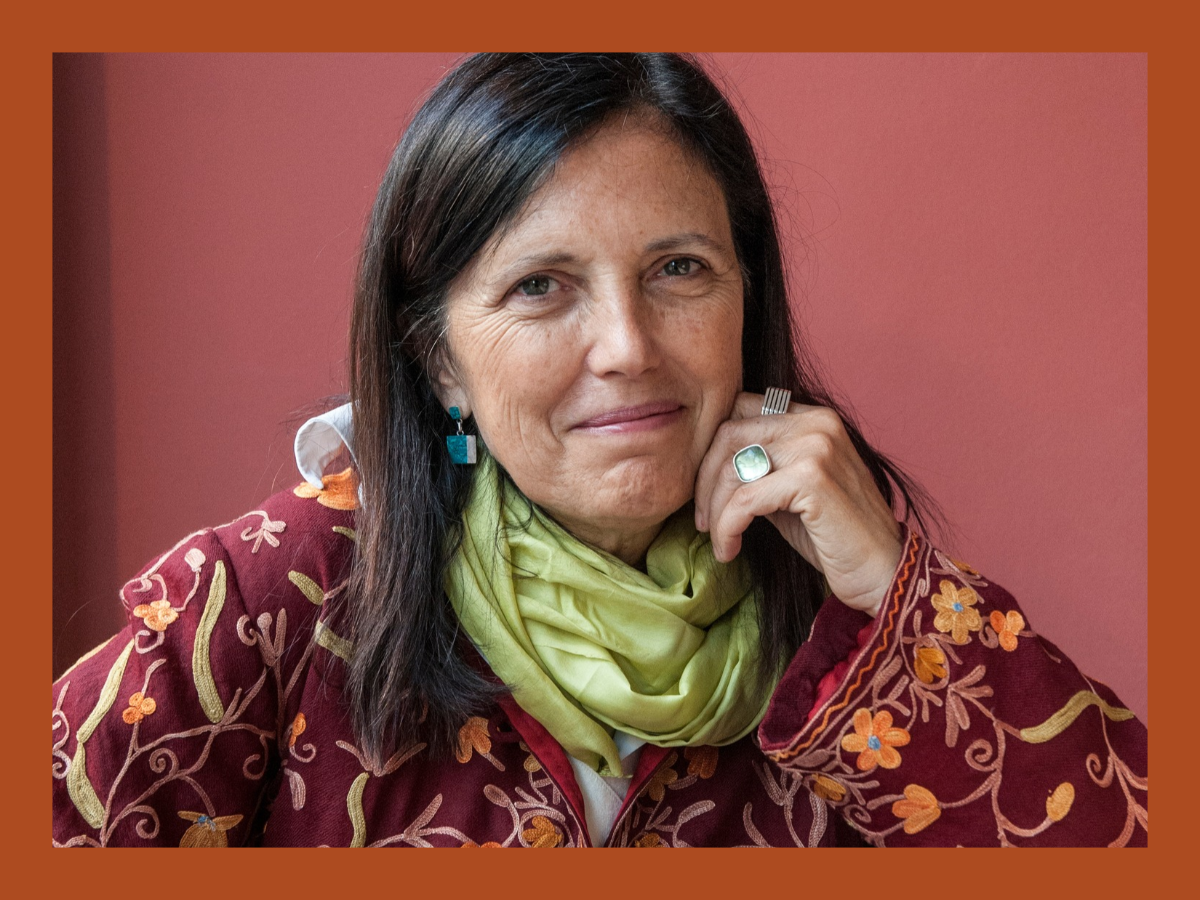
Photo: Claudia Piñeiro.
Claudia Piñeiro is an Argentine novelist, playwright, screenwriter, and journalist, and the third most translated Argentine writer, after Borges and Cortázar. She is the author of Thursday Night Widows, winner of the 2005 Premio Clarín de la Novela; Elena Knows, shortlisted for the 2022 International Booker Prize; and Cathedrals (Catedrales), winner of the 2021 Dashiell Hammett Prize, which appeared in English this year from Charco Press. She has also received the Pepe Carvalho Prize for her contributions to crime fiction, and she has written for the stage and television, including the Netflix series El Reino. Her newest novel, El canto invisible, follows an editor who sets out to finish a dead friend’s unfinished book, using the study of bird songs to navigate her grief and bridge the deep ideological divide with her own grandson.
At a moment when Argentine literature is read well beyond its borders, and when culture at home is contested, we asked Piñeiro how her books travel, what questions they pose, and what it means to stop and listen.
One. I have to admit that, although I am Latin American myself (from Panama), I initially encountered one of your books, Cathedrals, here in Cambridge, and then again months later in Edinburgh. Both times I read them in English. This makes me think about the strange geography of readership: we sometimes get to know the literature of our own region in another language and in another country. When you write, where do you locate your readers, and how has that changed since your work has been widely translated and taken abroad?
CLAUDIA PIÑEIRO: Sometimes, between the different countries in Latin America, it’s difficult to circulate books. My publisher, Alfaguara, circulates them more than others. Nowadays, books from independent publishers sometimes circulate more widely, because the owner of the publishing house packs the books in their backpack and travels everywhere with them. In contrast, with major publishing houses based in Spain, it’s often the case that authorization from the government is required for books to be sent to certain places. There are all sorts of corporate considerations involved, so it isn’t always clear why books end up in one place rather than another.
That said, my books do reach quite a few places; for instance, if I attend a book fair or a festival in a country like Panama, my books will be available there—but for the rest of the year, they might not be. If you were to look for them at any other time, you might not be able to find them. This is true for my own books, as well as those of many other Latin American writers, and it’s a real shame that we don’t read each other more. For a long time, it was difficult for us to find books by Uruguayan writers—even though Uruguay is right there; it’s almost as if we were cousins, yet their books were hard to come by.
This is an issue regarding the circulation of literature that is gradually being addressed, especially thanks to independent publishers. As for my readers, I always think in terms of a Spanish-speaking audience, since that is the language in which I write. While I love having readers who speak other languages, it’s not as if I sit down to write thinking, Oh, I wonder how much this will come across in Germany or Italy. It’s much more natural for me to think about the people around me, and to let that story travel, much like so many stories from other countries travel to Argentina.
Two. In the English-speaking world, your first books were published under an imprint specializing in “crime fiction”; however, more recent translations (such as those from Charco Press) are explicitly framed as “literary fiction.” Does this distinction between crime fiction and literary fiction function similarly or differently in Argentina? And what can the change in the presentation of your work abroad tell us about these categories through which different cultures learn to read each other?
CP: In Argentina, my books aren’t classified as crime fiction. In other words, if you go to a bookstore, you won’t find them in the “crime” section; you’ll find them under “novels.” This is because they are understood more through their broader context than through a crime-genre framework. In some countries, they are placed in the crime section, but what happened in an English-speaking country like the UK is unique. I’m not sure now, but when these works were being translated, only 4% of the literature published in the UK was in translation—that is, out of everything printed there, just 4% were translated works.
Within this, you had your Murakami, Vargas Llosa, you name it. Breaking into that 4% was incredibly difficult, so when a publisher offers to publish you, you generally say yes. The how doesn’t really matter, as long as you can break into such a challenging market. When I published Thursday Night Widows, a novel with more of a crime-fiction tone, Bitter Lemon expressed their interest. They went on to publish others, Betty Boo, All Yours, that feature a more prominent crime plot than my more recent work. They chose those specific titles, while opting not to publish others that did not have that plot, such as Elena Knows. That’s why Charco was able to translate Elena Knows. As time went on, more options like Charco started popping up, which is an independent publisher based in Edinburgh that focuses exclusively on Latin American authors.
They prioritize different criteria; they don’t fixate on genre, even though they do publish genre fiction. For example, they have Giovanna Rivero, a Bolivian author whose work is often categorized as horror elsewhere, but for them, genre isn’t the focus—if they like an author, they include them in their catalog. In my case, they publish the novels that are even less focused on crime, works where the intimate and the private take precedence over any crime-related narrative. I’m very happy to be with Charco because they handle distribution in England exceptionally well; in fact, it was thanks to Charco’s publication of Elena Knows that the book became a finalist for the Booker Prize.
Three. Your work has spanned an incredibly wide range of mediums—you’ve written for the stage, television, children’s literature, and journalism alongside your fiction. When an idea arrives, do you already sense the form it needs? For example, with Elena Knows, was there ever a point where you imagined telling that story through another medium that wasn’t the novel?
CP: When I first conceive of a story, I always think in terms of writing a novel. Writing a novel is what comes to me automatically. I don’t think, Oh, maybe this story would work better as a play or a screenplay—I always think of a novel. It’s what comes naturally to me. It is true that with All Yours, one of my first novels, I started writing it as a screenplay, but that was because I was attending a screenwriting workshop at the time. I soon realized, however, that everything I wanted to convey was taking place inside the protagonist’s head. Writing a screenplay that unfolds within a character’s mind implies a permanent voice, which I don’t particularly like in screenplays, so I decided this story had to be a novel. In any case, I gravitated back to the novel, the form where I feel most at ease. If an idea comes to me out of the blue—it’s a novel. When I do write screenplays, it’s usually in the context of projects with other people. We’ll say, Hey, let’s write a screenplay for such-and-such, and I’ll collaborate with someone like Marcelo Piñeyro, for instance, the person with whom I’ve co-written the most screenplays. But that’s more of a task than a desire to tell a story through literature.
I think that’s because the novel allows you to explore many secondary paths. A short story—and I do write short stories, though less frequently—is something precise. It’s like clockwork. A novel lets you introduce secondary characters and subplots, and move back and forth; for me, that’s what’s appealing about the novel. It’s not just about recounting the specific plot or what happens to a particular character, but about depicting the entire surrounding context: the society in which the character moves, along with other issues related to the story.
Four. In a conversation last year with El Marplatense, you talked about how crime fiction answers the question “who killed her?” (“Bueno depende, porque un policial responde a la pregunta ¿quién lo mató? ¿Por qué?”) whereas your work has often refused that framework, pursuing other questions instead. So what are the questions your work poses?
CP: Every book poses a different question, but there are certain questions that appear in all of them. They have to do with death; death is present as an enigma. It’s one of the most significant enigmas that human beings must endure. We all know that we are going to die. Some people forget it for a while so they can live with greater peace of mind, but the fact remains that life is finite, and this finitude is present throughout my novels. Secrets, hypocrisy, family ties, motherhood, as well as other types of relationships, all feature in my work. Thus, several questions are present simultaneously.
Five. You recently published a new novel, El canto invisible. While researching for this interview, I learned that the idea originated from an app used to identify bird calls. What was it about the experience that compelled you to write the novel, and how did birds become a gateway to the more human and political questions the book explores?
CP: That sound, and the ability to identify which bird is singing, makes me reflect on all the life that surrounds you in Latin America, often going unnoticed. It could be birds or could be other things, even people. We often fail to pay attention to the many sounds that reveal the presence of life, concerns, and emotions all around us—things that frequently go unperceived. It began with listening to that life in a 360-degree radius; sound, after all, exists in 360 degrees. Unlike sight, which is directed forward, sound allows you to perceive your entire 360-degree environment, revealing living beings communicating with one another. And being attentive to this made me far more attentive to other “songs” within society: people with different perspectives, young people who don’t feel included in the world as adults perceive it today, and other songs that, in our society, go unnoticed if you don’t stop to listen. And that’s what this app did: it made me stop and listen, stop and be able to pay attention to what's around me.
Six. And in this novel, there’s a younger character who thinks of J.D. Salinger as a “writer who disappeared” rather than thinking of any Argentine writer. What does this gap tell us about how Argentine literary and historical memory is transmitted? Within the specifically Argentine context and considering, in particular, the themes explored in your latest novel regarding what is lost and the distinction between merely hearing and truly listening, how do you view the role of the writer in Argentina today?
CP: Of course, the situation for this girl is even more complicated for this young woman—it’s not as if she chose this author because he was American or Argentine; rather, she had been asked to write about some sort of literary curiosity. Then she goes to her grandmother and says she wants to write about “disappeared writers.” Her grandmother—who, like me, lived through that era in Argentina—immediately interprets “disappeared writers” as those who were murdered by the dictatorship.
In our context, the term “desaparecido” carries a very specific, heavy connotation: it refers to someone who was kidnapped and made to “disappear” during the dictatorship. But it had never even occurred to this girl that this word might carry that connotation. She had simply seen a series on Netflix in which Salinger lives in seclusion and a girl has to respond to some letters, and thought it was an interesting premise, so she decided to write about Salinger. With as little depth as I am telling you now. And when she told her grandmother about desaparecidos, her grandmother thought of Walsh, Oesterheld, Haroldo Conti, who were writers killed by the dictatorship. When she understood, she couldn’t believe the difference in language. For someone my age, a desaparecido is a person killed by the dictatorship, while for a young person, a desaparecido is someone who disappeared and we don’t know why.
Literature in Argentina now is very much alive. There are many writers at work, many women writers winning awards and reaching a vast number of readers, with their work being translated all over the world. It strikes me as a moment of great vitality for literature and, furthermore, Argentine writers generally play an active role in the social and public sphere. This is especially important at this moment in Argentina, where culture is being disparaged and upholding the value of culture is extremely important.
Seven. Which of your books would you give to someone who is encountering your work for the first time?
CP: Whenever someone asks me to recommend a book by any author, I always ask, Well, what is this person like? What do they read? and then I offer a recommendation based on that. Generally, if it’s someone who doesn’t read much and just wants to be entertained, I suggest All Yours—my first novel—which is humorous and easy to get into. I know that in Argentine high schools, teachers often thank me because students really get hooked on that book, which is a welcome change from some of their mandatory readings. If it’s someone who enjoys a more measured, contemplative style of literature—the kind that demands closer attention—I would suggest Elena Knows. Its prose uses repetition, a recurring rhythm that mirrors the state of Elena’s own body, afflicted by Parkinson’s disease. There’s also frequent dialogue woven into the paragraphs. This unhurried text, I think, is appreciated more by someone without the urgency of a younger audience for whom All Yours might be a better fit.
*
Claudia Piñeiro es novelista, dramaturga, guionista y periodista argentina, y la tercera autora argentina más traducida, después de Borges y Cortázar. Es la autora de Las viudas de los jueves, ganadora del Premio Clarín de Novela en 2005; Elena sabe, finalista del Premio Internacional Booker 2022; y Catedrales, ganadora del Premio Dashiell Hammett 2021, que se publicó este año en inglés por Charco Press. También ha recibido el Premio Pepe Carvalho por sus contribuciones a la novela negra, y ha escrito para el teatro y la televisión, incluida la serie de Netflix El Reino. Su novela más reciente, El canto invisible, sigue a una editora que se propone terminar el libro inconcluso de una amiga fallecida, utilizando el estudio de los cantos de pájaros para transitar el duelo y tender un puente sobre la profunda brecha ideológica que la separa de su nieto. En un momento en que la literatura argentina se lee mucho más allá de sus fronteras, y en que la cultura en el país está en disputa, le preguntamos a Piñeiro cómo viajan sus libros, qué preguntas plantean y qué significa detenerse a escuchar.
Uno. Debo admitir que, aunque yo soy latinoamericana (de Panamá), la primera vez que vi uno de sus libros, Catedrales, fue aquí en Cambridge y fue traducido al inglés y después, meses después, en Edimburgo lo vi de vuelta. Esto me hace pensar en la geografía extraña de cómo leemos, que a veces nos encontramos con la literatura de nuestra propia región en otro idioma y en otro país. ¿Cuándo escribe, dónde están sus lectores y cómo ha cambiado esa percepción desde que su obra empezó a ser traducida y llevada al extranjero?
CLAUDIA PIÑEIRO: A veces, entre los distintos países de Latinoamérica, cuesta mucho que circulen los libros. Yo estoy en una editorial que es Alfaguara y circula más que otras. Ahora, a veces circulan más los de las editoriales alternativas, porque el dueño de la editorial alternativa se pone en la mochila los libros y circula por todas partes. En cambio, en las grandes editoriales, muchas veces necesitan que España autorice para que vaya a determinados lugares. Hay todas unas cuestiones empresariales por qué no sabes por qué los libros van a algún lado o al otro.
De todos modos, los libros van a bastantes lugares. Por ejemplo, en un país como Panamá, si yo voy a una feria, como he ido a un festival en ese momento, llevan los libros. El resto del año, a lo mejor no lo llevan. Y si vos lo vas a buscar en cualquier momento, quizás no lo encontrás. Eso pasa con mis libros y con los muchos latinoamericanos que decís; qué pena que no nos leemos más. Nosotros durante mucho tiempo nos costaba encontrar libros de uruguayos que están enfrente, casi como si fuéramos primos. Y nos costaba encontrar libros de uruguayos.
Es un problema de la circulación de la literatura que de a poco se va corrigiendo, sobre todo con las editoriales independientes. Pero mis lectores, yo siempre pienso en los lectores de habla hispana porque es la lengua en que escribo. Me encanta tener lectores en distintas lenguas, pero es raro que cuando me ponga a escribir esté pensando, Uy, cómo es que se verá esto en Alemania o en Italia. Es mucho más fácil para mí pensar en los que me rodean y que esa historia viaje como viajan tantas historias de otros países hacia la Argentina.
Dos. En el mundo angloparlante, sus primeras obras se publicaron bajo un sello especializado policial, pero sus traducciones más recientes (con Charco Press, por ejemplo), se marcan de una manera más explícita como ficción literaria. ¿Ha operado de manera diferente esa distinción entre lo policial y la ficción literaria en Argentina? ¿Qué nos dice el cambio de la presentación de su obra en el extranjero sobre las categorías por las cuales distintas culturas aprenden a leerse entre sí?
CP: En la Argentina, mis libros no están clasificados como literatura policial. Si vas a una librería, no las vas a encontrar en policial, las vas a encontrar en ‘novelas’ porque se entienden más por el contexto que por la línea policial. Hay países donde sí lo ponen en la línea policial, pero lo que pasó en Inglaterra es algo muy particular. Inglaterra, no sé ahora, pero cuando se tradujeron esas obras, traducía solamente el 4% de la literatura que se imprime. De todo lo que se imprime en Inglaterra, solo el 4% eran traducciones.
Y ahí entran Murakami, Vargas Llosa, todo lo que se te ocurra. Entrar en ese 4% era dificilísimo, entonces cuando viene una editorial y te quiere publicar, generalmente decís que sí, no importa cómo, porque la cuestión es entrar en ese mercado que es tan difícil. Entonces, cuando yo publiqué Las viudas de los jueves, que era una novela más de tono policial, vino Bitter Lemon y dijo que les interesaba. Después publicó otras que también eran Betty Boo, All Yours, que todas tienen alguna trama policial más importante que las últimas mías. Y entonces ellos eligen esas y después no publicaban otras que no tenían esa trama, por ejemplo, Elena sabe. Por eso Elena sabe lo que pudo traducir Charco. Con el tiempo aparecieron otras opciones como Charco, que es una editorial independiente de Edimburgo que traduce solo latinoamericanos.
Charco se fija más en otras cuestiones: no se fija en los géneros, aunque tiene novelas de género. Por ejemplo, tiene a Giovanna Rivero, que es una chica boliviana que en muchos lados está como género de terror y ellos no se fijan en el género. Les gusta un autor y lo tienen dentro de su catálogo. En el caso mío, tienen todas las novelas que son menos policiales aún—donde importa más lo íntimo y privado que la línea policial. Yo estoy muy contenta de que esté en Charco porque hacen una muy buena distribución en Inglaterra y, gracias a que Elena sabe estaba en Charco, fue finalista del Booker Prize.
Tres. Su obra ha abarcado una variedad amplia de medios y formas: teatro, televisión, literatura infantil, periodismo, aparte de su ficción. Cuando llega una idea, ¿siente ya de entrada la forma que necesita? Por ejemplo, con Elena sabe, ¿hubo algún momento en que imaginó contar esa historia a través de otro medio u otra forma que no hubiera sido una novela?
CP: Cuando primero pienso una historia, siempre pienso en escribir una novela. Lo que me sale automáticamente es escribir una novela. No pienso: "Ah, esta historia mejor la hago obra de teatro o mejor lo hago guión", siempre pienso en la novela. Es lo que me sale naturalmente. Sí es cierto que Tuya, que es una primera novela mía, yo la empecé escribiendo como guión pero porque iba a un taller de guiones entonces empecé escribiendo esa novela como un guión. Y después me di cuenta de que todo lo que yo quería contar pasaba en la cabeza de la protagonista entonces escribir un guión que pasa en la cabeza de la protagonista implica una voz permanente (que a mi no me gusta para los guiones) y dije mejor esta historia tiene que ser una novela. Pero de nuevo fue que me pasé a la novela que es donde me siento mas comoda. Si me aparece de la nada, es una novela. Cuando escribo guiones, generalmente tiene que ver con proyectos que hago con otras personas que decimos: “Che, vamos a escribir un guión para tal cosa,” y nos juntamos con Marcelo Piñeyro por ejemplo, que es el autor con el que yo más he escrito guiones. Pero más como un oficio que como ganas de contar una historia desde la literatura.
Yo creo que es porque la novela te deja ir por muchos lugares secundarios. Un cuento—porque yo también escribo cuentos pero escribo menos—es algo preciso. Es un mecanismo de relojería. La novela te permite meter personajes secundarios, líneas secundarias, ir y volver, y a mi me parece que eso es lo que me gusta de la novela. No contar solamente la trama puntual de lo que le pasa a un personaje, sino que contar todo el contexto que hay alrededor: lo que es la sociedad donde se mueve ese personaje y otras cuestiones alrededor de la historia.
Cuatro. En una conversación el año pasado en El Marplatense, habló de cómo el género negro responde a la pregunta “¿quién lo mató?” (“Bueno depende, porque un policial responde a la pregunta ¿quién lo mató? ¿Por qué?”) , mientras que su obra a menudo ha rechazado ese esquema y ha perseguido otras preguntas. Entonces, ¿cuál es la pregunta que plantea su obra?
CP: Cada libro plantea una pregunta diferente, pero hay unas preguntas que están en todos. Tienen que ver con la muerte; la muerte está presente como enigma. Es uno de los enigmas más importantes que tiene que soportar el ser humano. Todos sabemos que nos vamos a morir. Algunos se olvidan por un rato para vivir más tranquilos, pero sabes que la vida es finita y la finitud de la vida está presente en mis novelas. Los secretos están presentes en mis novelas, la hipocresía está presente en mis novelas, los vínculos familiares, la maternidad, pero también sus otros vínculos. Entonces varias preguntas están presentes a la vez.
Cinco. Acaba de publicar una nueva novela, El canto invisible. Investigando para esta entrevista, leí, y también lo mencionó en la charla ahora, que la idea nació a partir de una aplicación para identificar el canto de los pájaros. ¿Qué tuvo esa experiencia que la hizo querer escribir específicamente una novela, y cómo se convirtieron los pájaros en una vía de acceso a las preguntas más humanas y políticas que explora el libro?
CP: Ese sonido y el poder determinar qué pájaro está cantando así me hacen pensar en toda la vida que hay alrededor tuyo en Latinoamérica sin atención. Que pueden ser pájaros y pueden ser otras cosas, incluso personas. Y como no le prestamos atención a muchos sonidos que nos demuestran que hay vida, que hay preocupaciones, que hay sentimientos alrededor nuestro, a veces pasan desapercibidos. Entonces, primero era escuchar esa vida alrededor en 360 grados porque el sonido tiene 360 grados. No es como la vista que vos ves hacia adelante, sino que puedes escuchar en 360 grados alrededor tuyo, saber que hay seres vivos conversando unos con otros. Y estar atenta a eso me hizo estar mucho más atenta a otros cantos de la sociedad. Como decía en la charla, personas que piensan diferente, jóvenes que no se sienten incluidos dentro de lo que los adultos pensamos que es el mundo hoy y otra serie de cantos que, en la sociedad, pasan desapercibidos si no te detienes a escuchar. Y lo que hizo la aplicación es eso: detenerme a escuchar, detenerme y poder prestar atención alrededor de mí.
Seis. Y en esta novela, un personaje más joven piensa en J.D. Salinger como "el escritor que desapareció" (“Y la nena había visto una película en Netflix donde había un personaje que era un escritor desaparecido, que era Salinger (que se retiró de la vida pública en los años 60). Eso también te marca una diferencia generacional.” Infobae), en lugar de pensar en algún escritor argentino. ¿Qué nos dice esa brecha sobre cómo se está transmitiendo la memoria literaria e histórica argentina? Teniendo esto en cuenta, y los temas que aborda su última novela, ¿cómo ve el rol del escritor en la Argentina de hoy?
CP: Claro, la dificultad para esta chica es aún peor porque no es que eligió ese autor porque es estadounidense o argentino, sino que a la chica le dijeron que escribiera sobre alguna curiosidad literaria. Entonces ella va a la abuela y le dice quiero escribir sobre escritores desaparecidos. La abuela, que viene de mi época en Argentina. Vos decís escritores desaparecidos son escritores que fueron asesinados por la dictadura.
La palabra desaparecido tiene connotación: es el secuestrado y desaparecido durante la dictadura. Pero a esta chica ni se le ocurrió que tenía connotación la palabra. Entonces, desaparecido, ella había visto una serie en Netflix donde Salinger se recluye en su casa y hay una chica que tiene que mandar contestar unas cartas. Es una serie que está en Netflix. Le pareció simpático y quiso escribir sobre Salinger. Con tan poca profundidad como te lo estoy contando. Y la abuela que cuando le dijo desaparecidos, pensó en Walsh, en Oesterheld, en Haroldo Conti que son escritores que mató la dictadura, cuando entendió, no podía creer la diferencia también del lenguaje. Para una persona de mi edad, un desaparecido es una persona que mató la dictadura y para un chico joven, un desaparecido es alguien que desapareció y no sabemos por qué.
La literatura en Argentina está muy viva. Hay muchos escritores escribiendo, muchas escritoras ganando premios y con muchísimos lectores y traducciones en todo el mundo. Me parece que es uno de los momentos de mucha vitalidad de la literatura y además, en general, los escritores argentinos tienen bastante participación también entre lo social y público, lo cual es importante para este momento en la Argentina donde la cultura es despreciada y entonces poder sostener el valor de la cultural es muy importante.
Siete. ¿Qué libro suyo le entregaría a una persona que está acercándose a su obra por primera vez?
CP: Yo siempre cuando me dicen “¿qué libro me recomendás?”, de cualquier autor a alguien, digo “¿Bueno, como es ese alguien? ¿Qué lee?” Y entonces recomiendo desde esa perspectiva. Pero, en general si es alguien que lee poco, que le gusta estar entretenido por la lectura, le digo que lea Tuya, que es mi primera novela, que tiene humor y me parece que es fácil entrar a leer. Si lee mucho, en Argentina, en los colegios secundarios, los profesores me agradecen que los alumnos se ‘copan’ con ese libro y entonces no les resulta tan fácil a veces con algunas lecturas que hay que imponer. Y si fuera alguien que le gusta una literatura más reposada, más que necesita más atención, le diría que lea Elena sabe que tiene una escritura mucho más con frases que se repiten. Una literatura que se repite para acompañar ese cuerpo, ese cuerpo enfermo de Elena (que es una mujer que tiene Parkinson's) entonces hay mucho diálogo dentro del mismo párrafo, mucha repetición, mucha vuelta para atrás para volver a decir lo mismo. Y ese tipo de morosidad en el texto, me parece que lo aprecia alguien que no tiene la urgencia de un joven como el que tendría que leerTuya.