
FALL/WINTER 2025
Seven Questions with Jean Frémon
interviewed by Lucas Friedman-Spring, translated by Cole Swensen
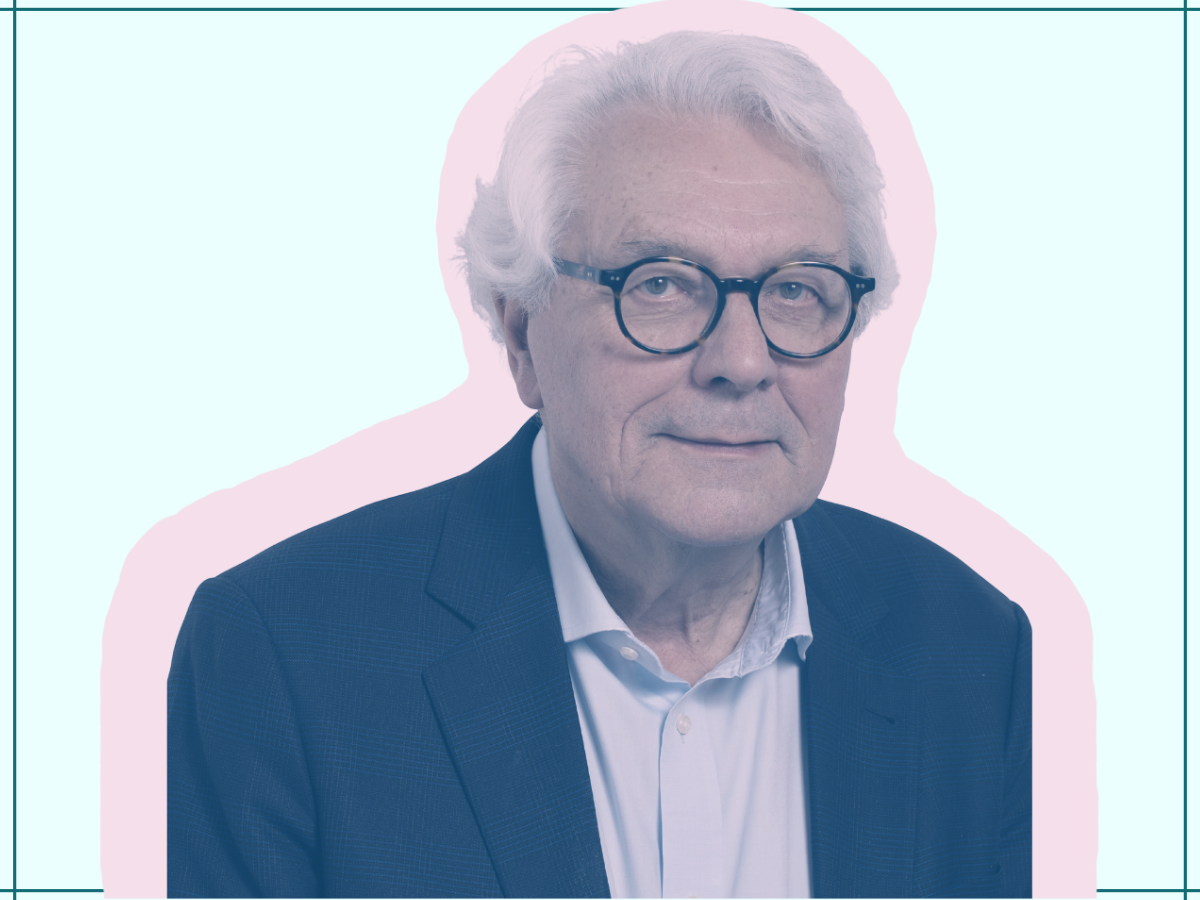
Photo: Jean Frémon
Jean Frémon first worked at the Galerie Maeght, representing such artists as Braque, Miró, Calder, Chagall, and Rebeyrolle before founding the Galerie Lelong. Today, the Galerie Lelong has branches in both Paris and New York, and exhibits—to give a few examples from their catalog—Yoko Ono, Etel Adnan, and David Hockney. Outside of his gallery work, Frémon is a prolific author, blending ekphrasis, biography, essay, and poetry—a kind of transatlantic postmodern belles-lettres. To try to establish any particularly rigorous division between the Jean Frémon who is the President of Galerie Lelong and the Jean Frémon who is author of, say, The Botanical Garden would be rather irresponsible; his “other profession” is alive in Frémon's literary work both in subject matter—Renaissance depictions of the penis of Christ, as in Nativity, or the life of Louise Bourgeois, as in Now, Now, Louison—and in the gallerist’s instinct implicit in his work—stories, scenes, the kind of odd, subtle, half-events that the writer Nathalie Sarraute called “tropismes” come to us as readers not forged in the smithy of the authorial soul but rather brought forth from a world over which the author claims no particular dominion other than that of the curator; what joy it is to find ourselves in the audience.
One. You write often about the personal lives of artists. What motivates this focus?
JEAN FRÉMON: I don’t have the imagination of a novelist who invents characters and plots. In the case of Walser and Louise Bourgeois, I was working toward a kind of identification—trying to bring their voices back to life through my words.
Two. There’s a lovely moment near the beginning of your book Nativity where you discuss the period (around the year 1360 at the dawn of the Renaissance) in which the book takes place: “It was a time when people readily believed in the unreal... All that didn’t actually exist enjoyed a kind of unlimited capacity for existence, while what actually existed saw its reality ferociously embattled and doubted.” It seems that there’s a real potential for creative intervention in the world in this kind of breakdown of the established order here. One may argue that we occupy a similar moment today; is this breakdown in the order of things that we’re seeing today also hospitable to artistic production? If so, how?
JF: I took the idea that the unreal is often more believable than the real from Clément Rosset, the author of The Real and Its Double. That was true at the time, when religious faith was not in dispute. In the era in which that story (Nativity) takes place, the news that a God had been born in a stable was considered perfectly natural. On the other hand, people had a much harder time believing that this god was a man. At the beginning of the Renaissance, painting was there to offer proof.
When religion or ideology is the main frame of reference, reality is viewed through a prism that distorts it, but without anyone being aware of it. This phenomenon is particularly active today, at this time of digital manipulation, artificial intelligence, and fake news.
Three. I’ve noticed that Galerie Lelong has a notably diverse group of represented artists. To what extent does fostering this diversity serve as an organizing principle of your (and the Galerie’s) curatorial work?
JF: The Galerie Lelong goes back a long way. It took over the Maeght gallery, which had been founded in 1945; I joined it in 1973. At that time, the art market was confined to Paris, London, and New York, and it was an almost exclusively male world. Our artists were Chagall, Miró, Bacon, Calder, Giacometti, and Matisse. We didn’t handle previously sold works, but dealt directly with the artists themselves.
The first opening of this closed circle occurred when we started to show women artists. Louise Bourgeois was the first woman to be given a retrospective at MoMA, and that was in 1982. At that time, she had never been shown in her native country. I gave her regular shows in both New York and Paris. From then on, we deliberately pursued a policy of openness to women artists and to artists from all over the world, particularly Asia and Latin America, including Ana Mendieta, Kiki Smith, Nalini Malani, Paula Rego, and Sarah Grilo. The world is open, and art is the best mode of communication among different cultures and traditions. New horizons are opening up for art every day. I just got back from Kazakhstan, where we installed a monumental sculpture by Jaume Plensa in front of the new museum in Almaty.
Four. Much of your work has been translated into English by the poet Cole Swensen, with other work being translated by Lydia Davis and the novelist Brian Evenson. I’m curious about why you seem to seek out translators who are themselves writers.
JF: The writers that you mention are friends, and it is they who have chosen to translate my texts, though sometimes, too, an editor has asked them. A translator is, or should be, above all, a writer. The understanding of a foreign language is a technical matter; what requires a translator’s sensitivity and talent is writing into the target language what another writer has expressed in theirs. It’s therefore not surprising that the best translators are also very strong writers.
Five. Your books are often very short—I remember I was able to read The Posthumous Life of RW in its entirety waiting for a delayed train. How, for you, does the length of a text manage the reader’s relation to it?
JF: I have a very busy professional schedule, and I can’t set aside entire days or entire weeks to writing alone. And so, it’s true; I write relatively short texts. It’s a choice—if possible to avoid heaviness and domination and to opt instead for lightness and finesse.
That said, I just read Henry Fielding’s Tom Jones, and I have to acknowledge that a 1000-page book can also be full of lightness and finesse…
Six. What do you expect from a visitor to your gallery? How are those expectations similar—or different—from the expectations you have of someone reading a book of yours?
JF: I began publishing when I was still a student, and yet I never thought that I would make it my profession. I’m perfectly happy keeping literature as a hobby. Over time, my profession and my writing have come closer and closer together. I’ve written many short articles for exhibition catalogues, and spending a lot of time with artists, museums, and art books has led me to write short tales and parables that feature real or imagined artists from all time periods.
The mystery of creation both interests and troubles me. I don’t try to explain it, but only to foster it, in the sense that it’s enough to blow on embers to keep the fire going.
Seven. What is a poet or artist that everyone reading this magazine should know (and might not already)?
JF: When I was 16, I read mostly poets. And I would knock on the doors of the ones I liked the most to assure myself that they were real. That was how I met Jacques Dupin. Dupin, a close friend of Miró, Giacometti, and Bacon, was the director of the Galerie Maeght. Ten years after we first met, he asked me to join the gallery that I run today. And so, it was a poet who definitively oriented my life. A book by Jacques Dupin, Notched, was just translated into English and published by Hermits United; I recommend it highly to your readers.