
SPRING/SUMMER 2026
Seven Questions with Sigrid Nunez
interviewed by Liz Cettina
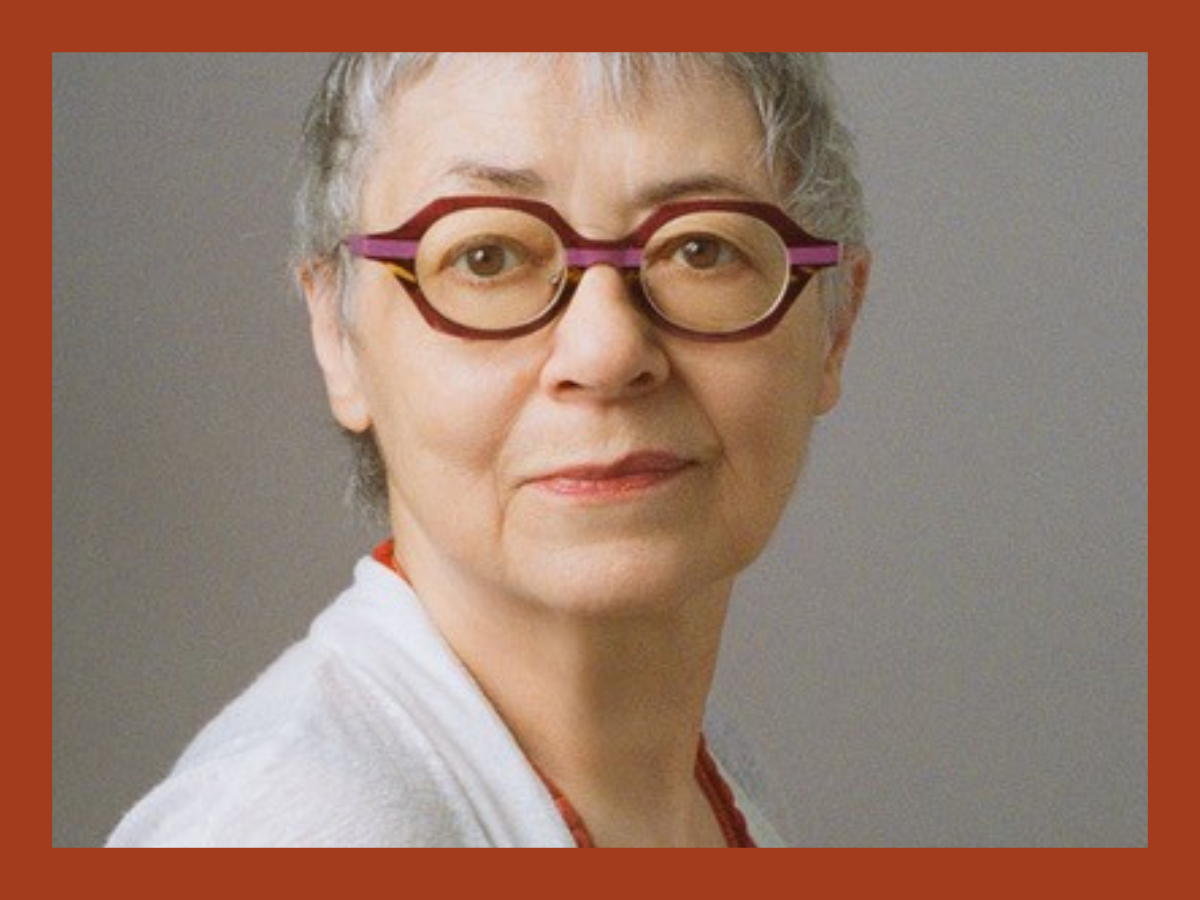
Photo: Sigrid Nunez. Image courtesy of Adam Lerner.
Sigrid Nunez’s first-ever short story collection It Will Come Back to You is full of returns. The collection centers memory, written correspondence, and nostalgia. The stories are returns in and of themselves, too—they have all previously been published in periodicals and magazines from Harper’s to Conjunctions to the London Review of Books. What’s novel about them is their arrangement. No longer scattered sheets of ephemera, surrounded by texts written by and about other people, now the stories are bound together, parts making up a solid and complex whole. Fans of Nunez will love the way the stories speak to one another, but they may itch for more, like greedy-eyed regulars at a favorite restaurant leaning in and asking, What does the chef have that’s new?
Interviewers, eager to uncover what is hidden or withheld, must walk the tightrope between curiosity and nosiness, a fine line that Nunez writes about in several of her stories. (Take the story “Curiosity,” for example, in which the main character uses catsitting as an excuse to snoop around her neighbor’s apartment.) When this interviewer asked if she had considered including any previously unpublished stories in this collection, Nunez replied no—she doesn’t have any. When asked about personal effects, like a journal or a diary, Nunez said she used to keep a diary, then stopped—then got rid of them. In Nunez’s responses, one may hear echoes of the mother in “Mother-Daughter Story” reacting to the posthumous publication of Franz Kafka’s “Letter to My Father”: “What makes literary genius an exception?”
One: Your collection is full of things that return to the characters: memories, objects, letters, people, feelings. The narrator of the title story asks, “What I want to know is why so much that is unequivocally not important comes back.” What are some things that have recently come back to you? Do you have any idea why or how they’ve returned?
SIGRID NUNEZ: One of my main observations is precisely that so many clearly unimportant memory flashes appear to come out of nowhere, for no apparent reason, with no obvious trigger. I’m talking about sudden images, or moments, not detailed memories. As for more important memories that come back, there’s always a constant flow. Like most people, as I go about my day, I remember all kinds of things, and one memory might lead to another. A huge part of our consciousness is remembering.
Two: What prompted you to publish this short story collection now? How do you see it fitting into your larger body of work? What might longtime readers of your work find in this collection that feels familiar, or new?
SN:After I finished my most recent novel, The Vulnerables, I found myself working on short stories. I thought this group of new stories put together with some of my older stories would make an interesting next book. I didn’t think about how the stories might fit with other work of mine beyond the fact that they all have the same author. The most obvious thing readers of my novels will find that’s new is how I deal with the shorter form. They will also find many of the same themes that have concerned me as a novelist: love and friendship, family relations, loss, mortality, the role of memory in shaping who we are. The characters in the stories, like those in the novels, tend to be ordinary people dealing with the necessities and vicissitudes that are a part of every human life. I hope readers will find lightness and humor in the stories as well.
Three: Many of your characters claim not to be curious—about others or even themselves—yet they often reveal a deep curiosity. Why do you think people deny or downplay their own curiosity? Writing this question, I was thinking about the narrator of “Curiosity.” After trying to imagine herself into her neighbor’s apartment, she says, “But all of this makes it sound as if I gave far more thought to the situation than I really did.” Do you think people try to seem less curious than they are, like Flora feels like she has to in “The Naked Juror” to obtain a spot on the jury? Would you describe yourself as a curious person?
SN: The question puzzles me. Which of my characters claim not to be curious? I can’t recall any one of them for whom a lack of curiosity is a significant personality trait. The fact that the narrator doesn’t give that much thought to one particular situation doesn’t imply she’s someone wholly lacking in curiosity. In fact, she is not just curious but downright nosy about her neighbor, isn’t she? And do you mean do I think people try to seem less curious in general? I don’t know, but I do know that most of us are raised to believe that being too curious about other people and their lives is rude and inappropriate. But for me, curiosity is more often a virtue than a vice, and it’s an absolute necessity for a person’s creative and intellectual life. As for me, yes, I am an extremely curious person, as I believe any writer has to be.
Four: Georgette, the protagonist in your novel The Last of Her Kind, reflects that “life really is like a novel, with patterns and leitmotifs and…people who must return before the ending,” while the narrator of this collection’s title story wonders, “Aren’t we all unreliable narrators of our own lives? I see in her the little novelist that sits in each of us busily working to arrange experience into story.” Where do you place yourself on that spectrum—are we the authors of our lives, or merely their interpreters? This also makes me wonder about your own memory-writing. Do you have any interest in writing or publishing another memoir?
SN: We are both authors—narrators—and interpreters. The act of narrating, reliably or unreliably, is an act of interpretation. We use memory and imagination “to arrange experience into story,” and then we use whatever story we come up with to explain our lives to ourselves. I’ve already used a good deal of autobiographical material in my novels, including about childhood, coming of age, and my life as a writer. So that makes another memoir not very likely, if not completely out of the question.
Five: In “Mother-Daughter Story,” the narrator receives a rejection in the mail for a story she had completely forgotten about. When assembling this collection, did you rediscover any stories you had forgotten about? What was that experience like? Did you consider including any as-yet unpublished stories? If not, why not? If so, why didn’t they make the cut?
SN: There were no forgotten stories, but there were several that I did not like enough to want to include in the collection. In fact, only about half of my published stories are in It Will Come Back to You. I didn’t have any unpublished stories to consider, unless you count the ones I wrote while still in school.
Six: Do you keep a journal or personal archive that you return to? What role do you think journals should play, if any, in an individual’s memory or a writer’s legacy?
SN: I kept a journal for many years but there came a point when I simply lost interest in doing so and stopped completely. One day I decided to read all my journals in chronological order, which took quite some time. I read them because I was planning to get rid of them, and I thought I should read them all first. I wanted to get rid of them because they were private and not meant to be read by anyone else. I didn’t want them to be found among my belongings after I died.
[In response to your second question,] [t]hat would be entirely up to the individual. As a general rule people keep journals simply because they want a record of things they want to remember. And for some it’s a kind of meditative practice. In this regard I like Woolf’s famous words: “Occupation is essential. And now with some pleasure I find that it’s seven, and must cook dinner. Haddock and sausage meat. I think it is true that one gains a certain hold on sausage and haddock by writing them down.” In her case, journal writing gave her a sense of calm and a grounding in reality. She drew pleasure and comfort not just from cooking and eating dinner but from writing those words down. That was a help to her at this particularly difficult moment in her life. These lines are from her last diary entry, written a few weeks before she took her life.
Seven: In “Mother-Daughter Story,” the mother recalls a college course in which she read Kafka’s “Letter to His Father,” published by Kafka’s friend against the author’s will. The mother recalls being the only one in her class to have moral objections to this decision: “What makes literary genius an exception?” Do you think readers have the right to read anything an author has written, or should the author have the final say in how, where, and when anything they’ve written is disseminated?
SN: An author can’t have final say about everything regarding their work, because a lot of other people are necessarily involved in the fate of any literary work. You don’t have a right to that kind of control. But I believe that if someone has specifically stated that they do not want certain things they’ve written to be published that that wish should be respected. What’s the point of making a will or declaring your last wishes if it’s okay for those who survive you to ignore all that?