
SPRING/SUMMER 2026
Seven Questions with Zachary Fine
interviewed by Lillian Yang
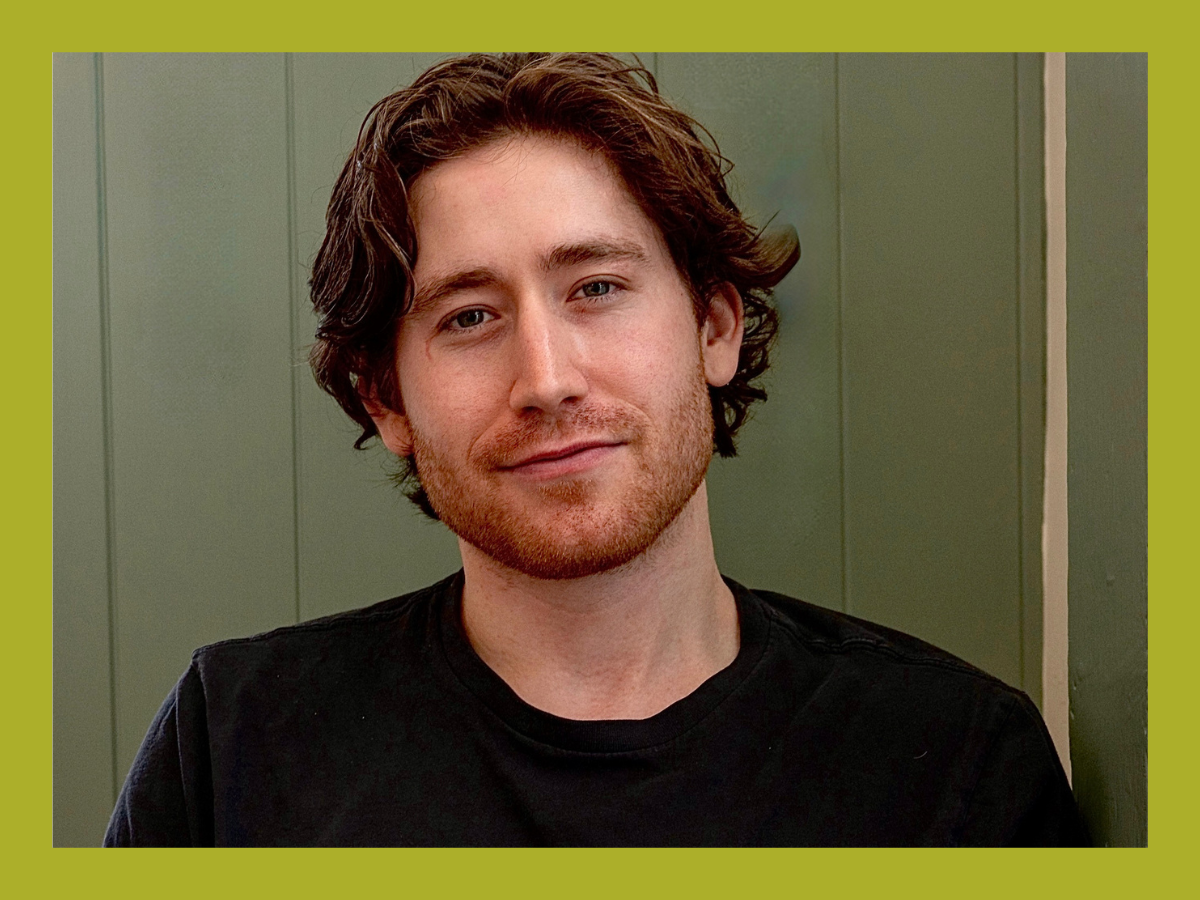
Photo: Zachary Fine.
Zachary Fine is a writer and critic who currently serves as the Kim-Frank Postdoctoral Fellow in Criticism at Wesleyan University. He is a regular contributor to The New Yorker, where his reviews and essays, on topics ranging from Caspar David Friedrich’s high Romantic landscapes to the legacy of the Modernist photographer Man Ray, draw sustained critical attention to the ways many people look at, write about, and assign value to art. His writing has also appeared in The Atlantic, The Nation, The New York Review of Books, and Art in America, among other publications. At a moment when public art institutions and higher education are facing recurring crises, we asked Fine what it means to write art criticism today—with its multitude of constraints, ambitions, and hopes.
One. There are various approaches to the discipline of art criticism, from the Marxist tradition to the belletristic tradition. From your perspective, what is successful art criticism?
ZACHARY FINE: It’s hard for me to imagine criticism without the particulars: the journal or magazine where it’s published, the readership it's intended for, the historical moment when and where it flashes up. A successful piece of art criticism in Les Temps Modernes in 1950 looks very different from one in October in 1985, from one in The New York Times or Spike Art Magazine today.
Personally I’m drawn to criticism that combines a sort of interpretive brio—a lunge toward material conditions or the unconscious, or scraps of neglected history—and a linguistic resourcefulness. We often draw battle lines between critics with a flair for social antagonism and those with more belletrist leanings, but there are wonderful critics who incorporate elements of both: Susan Sontag, Gary Indiana, and T.J. Clark, for instance.
The challenge with defining successful art criticism is that there is such a wide range of examples that come to mind, by art historians, writers, and critics as varied as Théophile Gautier, Virginia Woolf, Fairfield Porter, Svetlana Alpers, Peter Schjeldahl, Kellie Jones, Hal Foster, Aruna D’Souza, Claire Bishop, Ben Davis…the list could go on and on. Is there a through-line? I don’t think so. I could try to find some vague property that unites them all, like self-reflexity or rigor, but I worry it wouldn’t hold. With some writers, their criticism actually benefits from a scattered attention. Others produce essays that are airtight machines of rigor, built on decades of scholarship.
Criticism is too capacious, as a genre, to have only one transhistorical model of quality. Sometimes it can shock and unsettle; sometimes it can synthesize and educate; sometimes it can entertain; sometimes it can experiment. There are different occasions and markers of success for each.
Two. Should critics judge? What is the role of judgment in art criticism today?
ZF: For art critics working in the U.S. today, I would argue judgment is imperative. The conditions that prompted Elizabeth Hardwick to write her famous 1959 essay on the decline of book reviewing—“Sweet, bland commendations fall everywhere upon the scene; a universal, if somewhat lobotomized, accommodation reigns…”—have mutated in strange ways. There’s an abundance of negative criticism, but much of it has been off-loaded from established publications into the discourse around articles, on platforms like Substack. Although some of that criticism can be good, much of it expresses an outright contempt for informed or expert judgment. There’s a conviction that all judgments about works of art are equal—which might seem egalitarian from a distance, but is more symptomatic of a “consumer is always right” ethos—and the risk, I’d argue, is that this damages the social value of art. To say that everyone should be encouraged to engage with art and to form judgments about it (which I believe) isn’t to say that everyone’s judgments are equal. If they were, what incentive would people have to learn anything at all? To engage seriously with other people’s ideas?
I’m focusing on negative criticism here, because it’s when the act of judgment becomes most visible, but judgments aren’t just a matter of “positive” or “negative.” We often talk about aesthetic judgments in roughly binary terms, as good or bad, beautiful or ugly—as if the terms of judgment in criminal law (“guilty”/”not guilty”) had been smuggled into aesthetics—with all other judgments flowing down that forked path. But there are so many different kinds of judgments. (I often think of Sianne Ngai’s work on the “interesting,” “cute,” and “zany,” for instance.)
For scholars and critics who spend much of their life devoted to the study of art, it’s important to model exemplary forms of judgment. Not for the Arnoldian reason of transmitting “the best that is known and thought in the world” and shaping the culture accordingly—art critics don’t have that kind of influence anymore—but out of a more basic urgency. Art critics are often told by readers that a review makes them want to learn more about an artist or go see their work in a museum. If we’re worried about declining enrollment rates, eroding public support for art institutions, and the evaporation of funding for artists, shouldn’t art criticism, and its most powerful tool—informed judgment—be a resource?
I also wonder if the rise of AI has, inadvertently, underscored the value of judgment. No matter how good LLMs become at producing writing—even writing that perfectly imitates a writer's style—they will never be able to produce a writer’s judgments; only simulations of them. Your participation is still required to judge.
Three. Writing art criticism often means writing for many people with no immediate access to the art being discussed and no affordable way to consume it (as with, say, literary or music criticism). To what extent is that constraint a limitation or an opportunity—and what does it demand of the critic?
ZF: It’s the ultimate challenge of writing art criticism for a general-interest magazine. And the joy of it, too. Since much of the audience lives in a different state or country than the exhibition being reviewed, the piece of criticism has an unstable reason for existing (from the perspective of the market). It can have economic consequences—supporting magazine subscriptions, driving attendance to museums, affecting the market value of contemporary art. (Although I’m skeptical art criticism has much impact on pricing these days; it doesn’t seem to matter what the criticism says, just that it indicates “buzz.”)
With a book, film, or album review, the reader can engage in a transaction that gives them direct access to the thing being reviewed. They have the option to buy and own the subject of a review. Art critics and readers have extremely limited access to the artwork being reviewed, and will never own it (or almost never). The price of admission at art institutions can also be forbiddingly expensive.
These constraints produce an odd genre of writing. Often there are few reproductions of artwork in a magazine, and so the critic is expected to conjure the visual experience of the art in the reader’s mind. Owing to strict word counts, sometimes you only have a single phrase to describe a complicated work of art. The sound of every word, its place in the rhythm of the sentence, will be just as important as what the words denote. (The roundness of a word like “smooth,” for instance, versus the jagged edges of “spackled,” and how that might be used to evoke, as much as describe, the appearance of an object.) Part of the reason I think art criticism has attracted so many poets—Baudelaire, Frank O’Hara, John Ashbery, Barbara Guest, Peter Schjeldahl, Eileen Myles, Ben Lerner—are the pleasures of ekphrasis and compression.
Four. Today, we increasingly see museums and universities both positioning themselves as spaces that teach people how to engage with art, and criticism also lives outside those institutions in magazines and podcasts. As a university educator yourself, do you think these competing interests give you a different kind of educational responsibility?
ZF: When I was a freshman in college, I had a friend who said that you could get the equivalent of a university education with a subscription to The London Review of Books. (Her father subscribed, and I’m now wondering if this was part of some ad campaign he absorbed…) I wouldn’t trade my college education for anything, but I must have taken her comment to heart. Around that time, I started reading magazines and journals, like The London Review of Books,Harper’s, n+1, October, Triple Canopy. I’m a slow reader, and wasn’t devouring entire issues but would spend long periods of time with individual essays, using them as a roadmap or makeshift curriculum for further reading. I’d also occasionally cast back into their archives, which were becoming more accessible online.
This reading seemed continuous with my university education and museum-going. One of the reasons I applied to NYU was the faculty in the Department of Art History and the Institute of Fine Arts; the other reason was to be near museums. At least a quarter of my memories from that period are of being with friends in and around art institutions in the city
So my education was coming from a number of sources that were mutually reinforcing. I see my work today in similar terms, from the opposite side. Whether I’m writing a piece of criticism for a magazine, discussing criticism in the classroom, or bringing students to a museum, all of these things are fired by an impulse to share ideas, to stimulate critical thought, and to generate enthusiasm for the subject matter. I only teach undergrads at Wesleyan, and have very few art history majors in my classes, so I encounter a number of students who are rightfully skeptical about the value of art and criticism. They’ll say “art” is just a code word for something elitist that reproduces inequality, or that long-form criticism is unnecessary in an age of Letterboxd. Part of my responsibility then isn’t only to teach art criticism but to make a case for why it’s valuable in the first place.
Five. How does the relationship between the writer, editor, and publication shape what art criticism can or cannot say?
ZF: I used to have a fantasy that every piece of published writing came with an X-ray that revealed the entire editorial process. This was in my early twenties, when I first started freelancing. If I received a harsh email from a reader about a sentence or an argument an editor had suggested, I wished I could point to the X-ray and show that it wasn’t me who wrote it.
This was the mentality of someone who had never been edited before. But once you get the hang of the social dynamics, learning how to work on a piece together with someone, as opposed to guarding it preciously, writing is never the same again. Great editors can make your ideas sharper, make your prose more engaging and lucid, push back on your worst impulses, and draw out the best. It’s a blessing. Learning to edit, and learning to be edited, is to see writing as a more social form. Although there can be bad editors, and not every piece of writing needs to be edited, it requires a narrow understanding of what writing is—as something that involves a shared, inherited language—to think of it as exclusively yours.
At The New Yorker, I work with an editor named Sharan Shetty. Sharan has a stunning gift for being able to intuit the voices of different writers, for finding the slackness in an argument or a paragraph and setting it straight. I often have the uncanny experience of reading something Sharan has edited and thinking it sounds more like me than what I wrote. While working on a piece, I also think about The New Yorker as an institution: the long run of art critics, going back to Murdock Pemberton; the magazine’s place in our culture today; and what its constraints are (in terms of language, word count, etc.). But it can be hard to balance that with every sentence and paragraph, and so often I’m writing with Sharan in mind. When I write for my colleagues at The Point, I imagine a different committee, one composed of Rachel Wiseman, Julia Aizuss, and Jon Baskin, all of whom are brilliant editors with distinct tastes and gifts that reflect those of the publication. For a number of years, I also wrote for an editor at The Nation, Kevin Lozano. I learned a great deal working with Kevin. His edits were incredibly generous, always finding unexpected ways to open up a piece.
So I still have the X-ray fantasy, but it’s different now. It’s about revealing the work behind an article—the structural edits, the fact checking, the copy editing, and the frenzied negotiation of all this that takes place via track changes, emails, and phone calls. It’s a brilliant circus that somehow, in the end, produces a polished and clean-looking piece of writing with half a dozen voices inside of it. There’s no way to present all of that information to a reader in a way that wouldn’t be boring, but I still like to imagine it.
Six. Over the past decade, art criticism has had to reckon with the collapse of its traditional infrastructure, fewer salaried positions, shrinking print venues, and the migration of discourse to social media, while simultaneously navigating an expanded field of art objects, contexts, and publics. From your experience, what has actually changed in how art criticism is written and who it is now written for? And would you reimagine the practice over the next five years?
ZF: The question of who art criticism is written for, and how that’s changing, is something I speculate about but don’t have a good answer to. Part of the issue is analytics, which evaluate the habits of readers online but give us a very skewed picture of who’s reading art criticism. When I write a web-only piece for a publication, versus one that appears in print, the range of responses is different. Readers who encounter the piece online will often write emails taking issue with the title of the piece, or with an element of the title they project onto the argument, even though the writer almost never chooses the title. When a piece appears in print, the responses are often more attentive to the argument and prose. This is all anecdotal, so I can’t scale it up to a broader picture of who’s reading art criticism. But it would be fascinating to do a survey of art critics and readers right now, across different publications.
If I had to reimagine the practice of criticism for the next five years, I would start by improving the conditions that make it possible. That doesn’t just mean increasing the pay for critics—which has become so low that it’s no longer even a viable part-time freelance gig—but working to find and create new audiences for reading criticism. Strategically speaking, we might start there, because demanding higher pay from small magazines often leads to a deadlock, where the critic says it’s unjust to be paid so little, and the magazine says it has nothing to give (owing to low subscription rates, a loss of support from grants and patrons, and rising operational costs). What my colleague Merve Emre has done at Wesleyan, with the Shapiro Center for Creative Writing and Criticism, is an example of a strategy that could be replicated at other universities, with the right institutional support. She’s put together a new curriculum, in just a few years, that’s already produced hundreds of young readers of criticism. Some of our students arrive in class on the first day having never read a piece of criticism, and by the end of the semester, they’re subscribing to magazines and journals, applying for internships to work at them, and—in a few cases—even writing for them. I don’t think it should be the job of the academy to single-handedly save art criticism, or to subject it to a new set of disciplinary protocols, but we can’t assume there will continue to be a readymade readership for it. Universities are one place to start.
Seven. When we were talking earlier, you described writing criticism today as feeling like the monkey in Pierre Huyghe's Human Mask. Can you tell us a little more about what you meant by that?
ZF: In the Huyghe film, there’s a monkey—a real monkey—who was trained to be a server in a tea house near Fukushima. The monkey wears a mask and a wig that makes it look like a little girl. After the nuclear disaster in 2011, Huyghe filmed the monkey going about its routine in the tea house, even though the whole town was abandoned. There were no customers. And so what we see is a monkey wearing a mask, running from the kitchen back to the tables, mechanically repeating a series of trained gestures. Sometimes rain drips through the roof onto the mask, so that it looks like the monkey is crying.
My identification with the monkey has less to do with the state of criticism and more with my own limited sense of agency. We’re supposed to be holding tightly onto our agency these days—to avoid total AI capture—but I’ve always had a vexed relationship to my own, especially with speech and writing. It feels like I’m hearing the words after they’ve been spoken, or reading them after they’ve been written, and never had a chance to understand how or why they arrived there. For some reason, it reminds me of the monkey.
Criticism is my attempt to short-circuit the patterns of thought and language I’ve been habituated into. Sometimes this means sacrificing a certain critical authority for a more searching voice, one trying to figure out what it thinks and why. But again, criticism can be many things.