
FALL/WINTER 2025
Verses on Oxherding
Jenny Jisun Kim
Introduction by Eunice Lee
A Korean Sonnet
(Introduction to the works of Jenny Jisun Kim)
ㅌ: The twelfth consonant of the Korean alphabet.
ㅍ: The thirteenth consonant of the Korean alphabet.
ㅌ/ㅍ: Let me pretend, for a moment, not to know what sound each letter represents. One represents the [p] sound, as in picture. The other represents the [t] sound, as in tame. But let me forget, for a moment, which is which.
ㅌ/ㅍ: Jenny Jisun Kim’s exhibition Verses on Oxherding (September 25–October 18, 2025, Klaus von Nichtssagend Gallery, New York) takes inspiration from two sequences: the fourteen consonants of the Korean alphabet, Hangul; and the Ten Oxherding Pictures, a series of Zen Buddhist illustrations depicting a boy taming a wild ox.
ㅌ: Inspired by the letter ㅌ, Return to the Dwelling (2025) features a dark splotch. Expanding across vertical bars, the splotch behaves like an animal moving in and out of an enclosure. Is the creature returning, or leaving? I am reminded of a very sarcastic Korean idiom—“lose your ox, then fix your ox pen”—which warns against belatedness. But the idiom and this painting also teach me that the absent animal, or the shadow that lurks long after its escape, necessarily reshapes the space it has left behind. The shadowy splotch moves sideways, conjuring the horizontal lines in ㅌ, as if to build a new “Dwelling” upon the red expanse.
ㅍ: Inspired by the letter ㅍ, The Hand of the Ordinary (2025) is intensely populated. Amorphous marks and splashes dwell harmoniously among beings that are architecturally and anatomically correct: pillars, beams, teeth. The figures form a society of sorts, fenced by a circular frame—the painterly eye that ponders the abstract and the figurative simultaneously. I am reminded of painter and critic Jesse Murry, whose writings Kim cited during her artist talk on October 1, 2025: describing himself as “an artist caught in the fluctuation between two points of time—the modern and the post-modern,” Murry writes that he paints from “the twilight zone of history.” The Hand of the Ordinary might offer a snapshot of that zone between two distinct modes of seeing.
ㅌ/ㅍ: A translator of Korean literature, Kim paints and writes from the twilight zone of language. I too speak and translate from Korean, and often fool myself into the belief that this language is fully knowable to me, as if placed under fluorescent lights—but Kim challenges me to unbuild my linguistic place of dwelling.
ㅌ/ㅍ: In Kim’s consonant-inspired paintings, the architecture of language appears flimsy and arbitrary. Why is ㅌ followed by ㅍ? What makes them the antepenultimate and penultimate consonants of this alphabet? Are their sounds natural to them, the way the bellows of oxen are natural to them?
ㅌ/ㅍ: And yet, these paintings also let me imagine a sacred and fateful connection between sound and glyph. Kim’s approach, both abstract and figurative, draws on the fact that the Hangul alphabet was designed to mimic the shapes of vocal organs. Throughout this series, imaginary threads run from the paintings to the letters to their sounds to their bodily origins and back, in an endless cycle.
ㅌ/ㅍ: Might I also imagine a sacred and fateful connection between the fourteen consonants of Hangul and the fourteen lines of a sonnet? In so doing, what pair of wild oxen am I trying to tame, or translate?
ㅌ/ㅍ: I imagine the sound of a torn kite;
the sound of a popped knuckle;
the sound of a turbulent brook;
the sound of a brick, placed on another brick;
the sound of a tractor;
the sound of a plushie;
the sound of a thousand termites;
the sound of a thousand paddles;
the sound of thunder on a clear sky;
the sound of laughter in an empty temple;
the sound of a stool;
the sound of a spool;
the sound of that time;
the sound of this place.
ㅌ: The twelfth consonant of the Korean alphabet represents the [t] sound. An ox is tamed.
ㅍ: The thirteenth consonant of the Korean alphabet represents the [p] sound. An ox is tamed.
/: In lieu of a belated volta, a loose cord. Verses on Oxherding leaves me in the broken ox pen, where my journey through the twilight zone both ends and begins. And I leave the fourteenth and final consonant of the Korean alphabet, its shape as well as its sound, to your imagination.
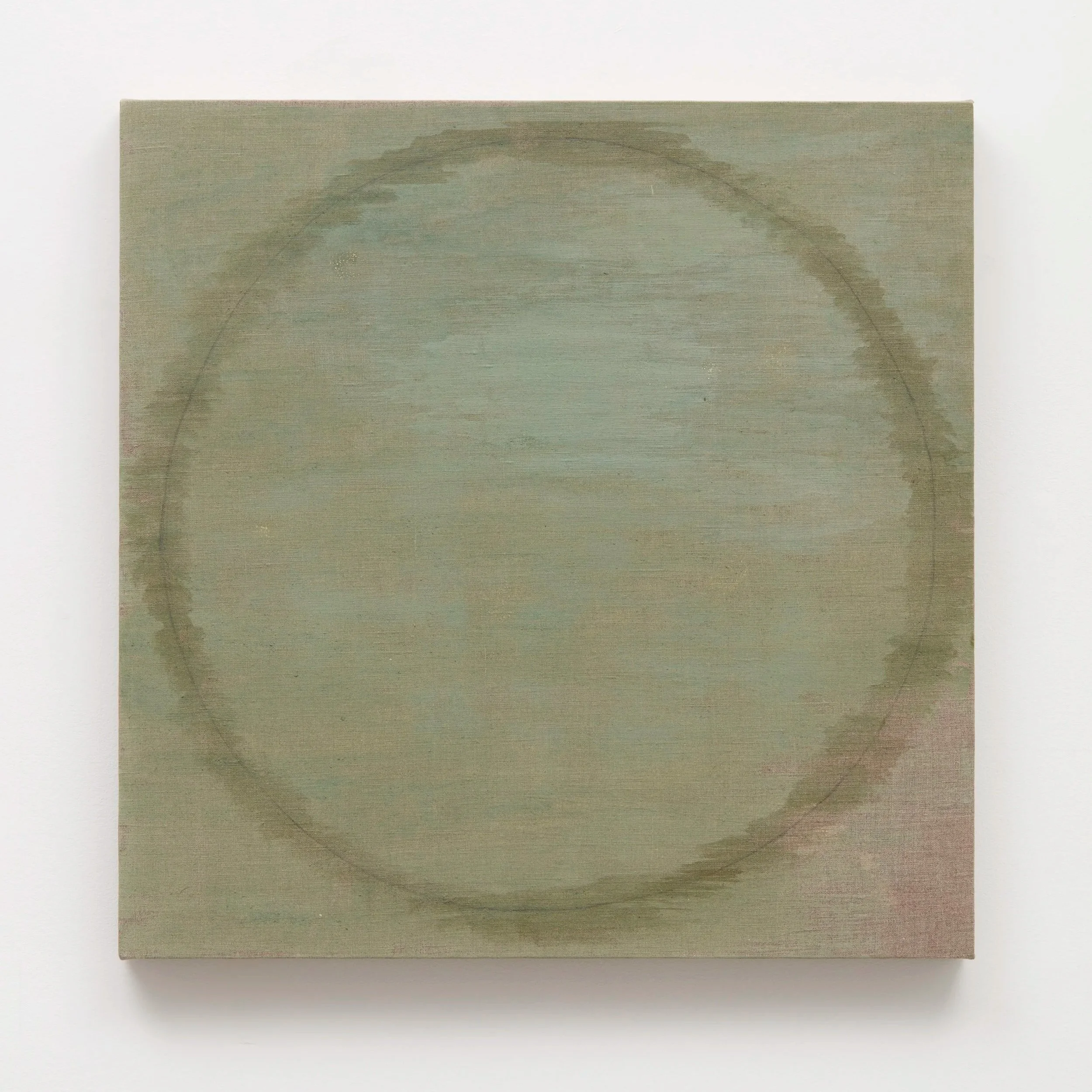
Carried, 2025
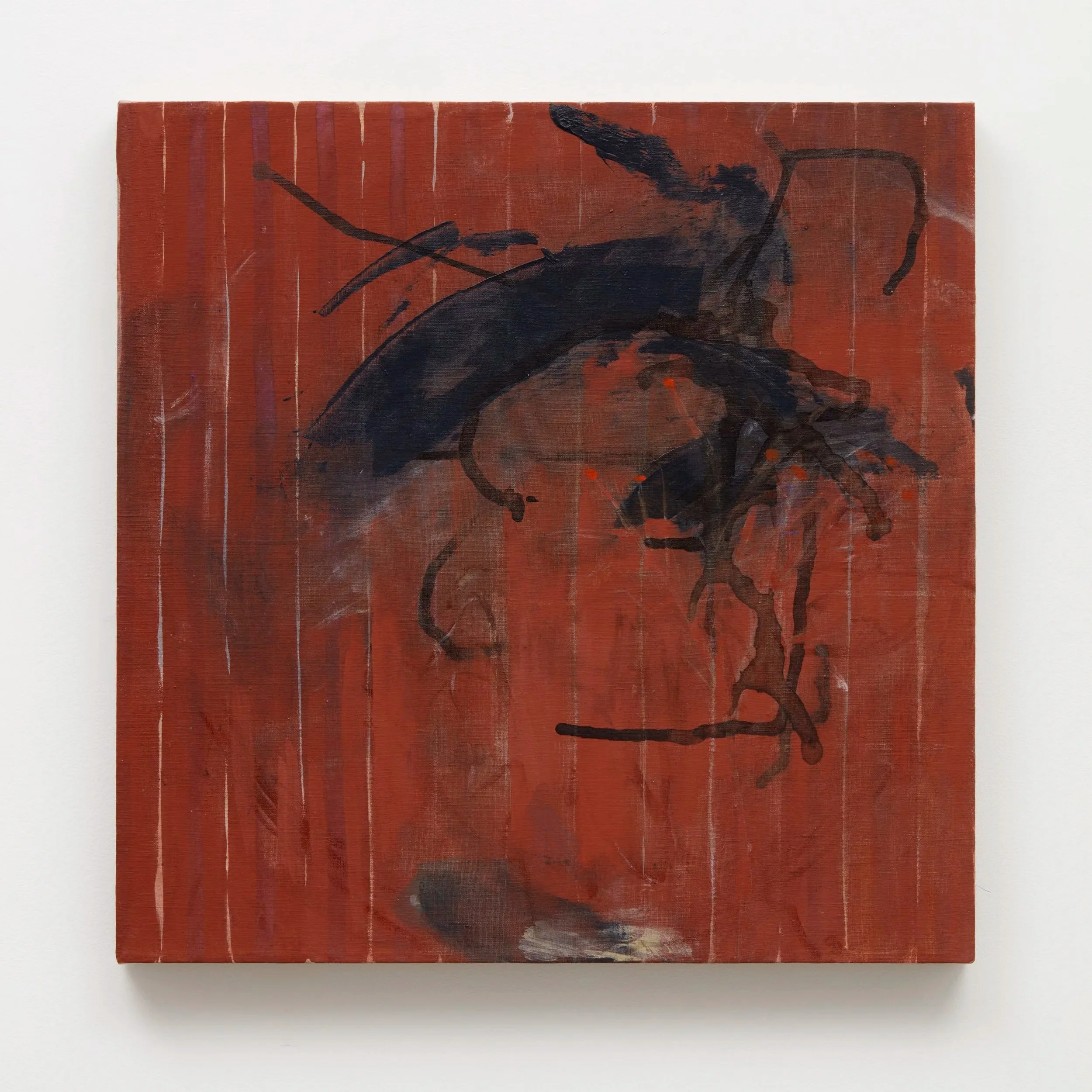
Return to the Dwelling, 2025
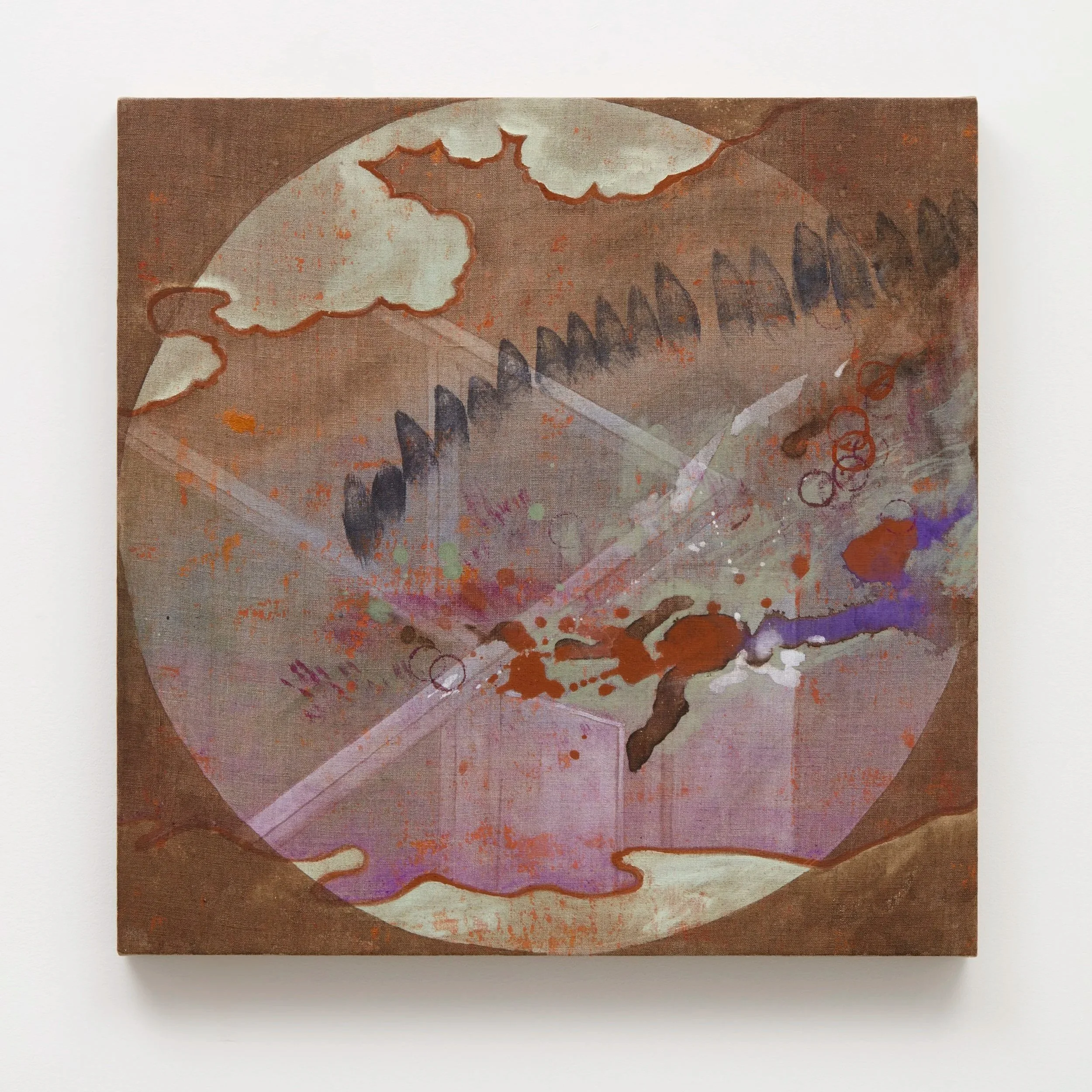
The Hand of the Ordinary, 2025
Courtesy of the artist and Klaus Gallery